- ENGAGED IN SPECIAL ENGINEERING PLASTIC PRODUCTS -
Engineering Plastics for Hydrogen Electrolyzer Components
You are here: Home » Products » PSU » PSU Parts » Engineering Plastics for Hydrogen Electrolyzer Components

loading

Share to:
facebook sharing button
twitter sharing button
line sharing button
wechat sharing button
linkedin sharing button
pinterest sharing button
whatsapp sharing button
kakao sharing button
snapchat sharing button
telegram sharing button
sharethis sharing button

Engineering Plastics for Hydrogen Electrolyzer Components

Availability:
Quantity:
JUTAI supplies PEEK, PEI, PSU and PPS engineering plastics for alkaline water electrolyzer and PEM electrolyzer components. Available services include material selection, sheet and rod supply, prototyping and CNC machining of insulating frames, spacer plates, sealing supports, manifolds and structural components. Conductive bipolar-plate applications require specially formulated compounds and project-specific validation.

Engineering Plastics for Hydrogen Electrolyzer Components

JUTAI supplies PEEK, PEI, PSU and PPS engineering plastics and CNC-machined components for alkaline water electrolyzer and PEM electrolyzer systems.

These materials can be evaluated for stack frames, insulating plates, spacer components, sealing supports, manifolds, connector housings and other structural or fluid-handling parts.

Natural unfilled PEI and PSU are electrically insulating materials and should not automatically be described as conductive bipolar plates. Conductive polymer bipolar plates require specially formulated compounds and separate validation of electrical conductivity, contact resistance, chemical stability and long-term electrochemical performance.

Material selection must be based on the electrolyzer type, electrolyte composition, concentration, operating temperature, pressure, electrical requirements, compression load and expected service life.

Engineering plastics for hydrogen electrolyzer components.png

Engineering Plastics for AWE and PEM Electrolyzers

Hydrogen electrolyzers contain components with very different functional requirements. Some parts must provide electrical conductivity, while other parts must provide insulation, sealing support, chemical resistance or dimensional stability.

A material suitable for an external electrical insulator may not be suitable for direct and continuous electrolyte contact. Likewise, a natural engineering plastic with good chemical resistance is not automatically suitable for use as a conductive bipolar plate.

JUTAI evaluates the component function and operating environment before recommending a material or machining solution.

Alkaline Water Electrolyzer Components

Alkaline water electrolyzers normally operate with an alkaline electrolyte such as potassium hydroxide solution. Depending on the equipment design and operating conditions, engineering plastics may be considered for:

  • Insulating stack frames

  • Spacer plates

  • Sealing support rings

  • Manifolds and flow-distribution components

  • Electrical isolation components

  • Structural supports

  • Instrument and connector housings

  • Machined prototype components

PSU, PPS and PEEK may be evaluated for selected alkaline electrolyzer parts, subject to the electrolyte concentration, temperature, mechanical load and exposure time.

For a more focused PSU application guide, see our PSU Sheet for Alkaline Water Electrolyzer Frames.

PEM Electrolyzer Components

PEM electrolyzers present different material-selection challenges, including high-purity water, differential pressure, an electrochemical environment and strict contamination-control requirements.

Depending on whether a component is exposed directly to the active electrochemical area, engineering plastics may be evaluated for:

  • Electrical insulating components

  • Sealing and gasket support parts

  • External structural components

  • Manifolds and fluid-handling parts

  • Sensor and connector housings

  • Compression-resistant spacers

  • Machined test and prototype fixtures

PEEK is often considered when higher temperature capability, chemical resistance and mechanical stability are required. However, every direct-contact application must be validated under the actual electrochemical and operating conditions.

Conductive Bipolar Plates and Insulating Plastic Components

A bipolar plate performs electrical, mechanical and fluid-management functions. A conductive bipolar plate must provide adequate conductivity and low contact resistance while maintaining chemical and dimensional stability.

Natural PEEK, PEI, PSU and PPS grades are not automatically conductive.

For conductive polymer bipolar-plate development, the material normally requires a conductive formulation containing suitable fillers. The finished compound and component should be tested for:

  • Through-plane and in-plane electrical conductivity

  • Interfacial contact resistance

  • Chemical resistance

  • Electrochemical stability

  • Mechanical strength

  • Dimensional stability

  • Gas permeability

  • Thermal cycling performance

  • Long-term compression behavior

Natural insulating grades are more appropriately positioned for electrolyzer frames, spacer plates, supports, manifolds, housings and electrical isolation components.
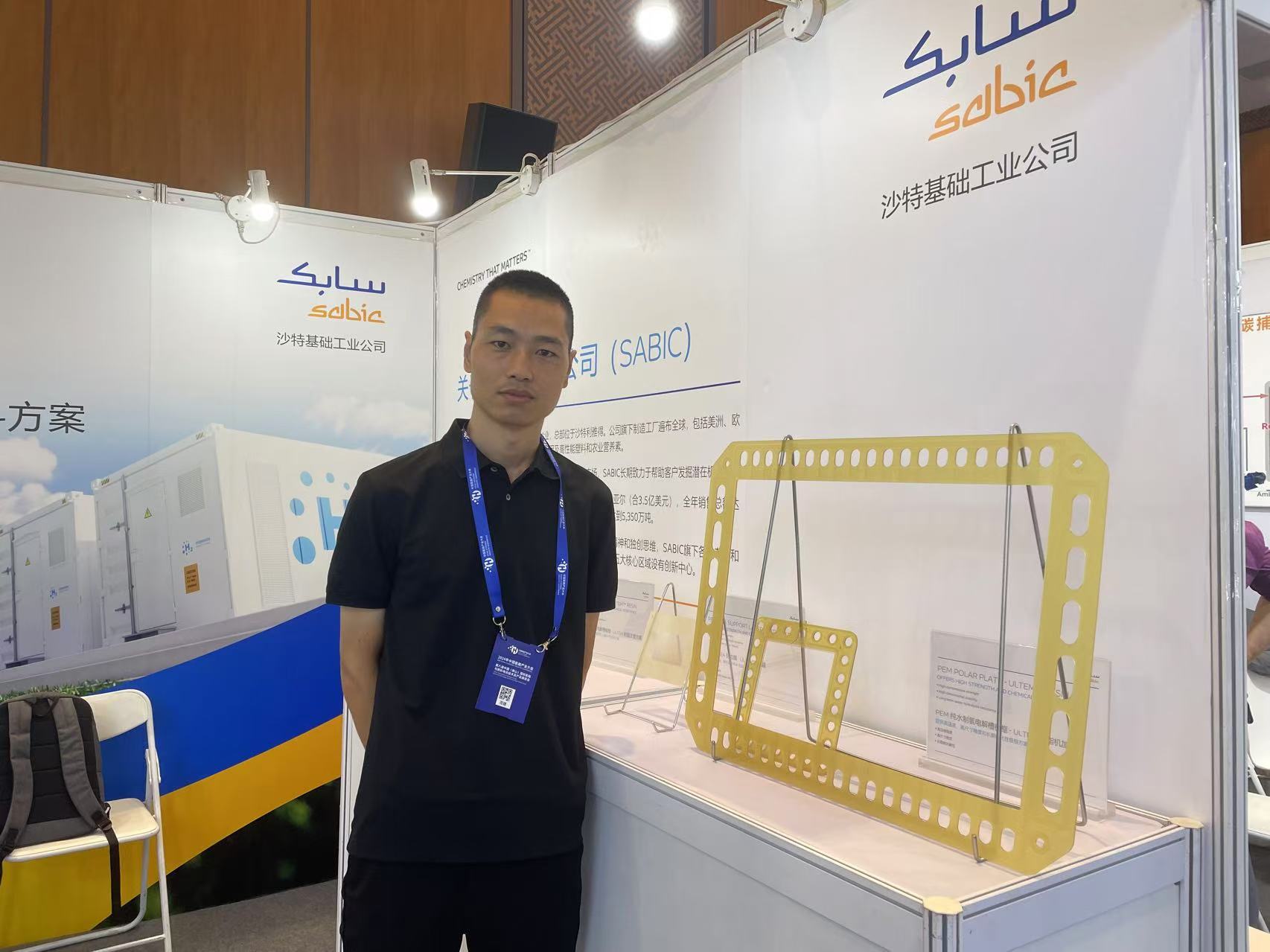
CNC machined plastic components for hydrogen electrolyzers

Material Selection Guide

PEEK for Electrolyzer Components

PEEK is a high-performance thermoplastic offering a combination of heat resistance, mechanical strength, fatigue resistance and chemical stability.

Candidate applications may include:

  • High-temperature insulating components

  • Manifolds and fluid-handling parts

  • Sealing supports

  • Compression-resistant spacers

  • Bushings and wear components

  • Precision-machined structural parts

A conductive PEEK bipolar plate requires a specially designed conductive compound. Natural PEEK should not be promoted as a conductive bipolar plate without appropriate modification and testing.

For projects requiring high-temperature resistance, chemical stability and precision-machined components, JUTAI also supplies JUTAIPEEK® NA Natural PEEK Rod Ø4–300 mm, with cut-to-size, annealing and CNC machining services available.

PSU for Alkaline Electrolyzer Frames

PSU is an amorphous thermoplastic valued for dimensional stability, hydrolysis resistance and electrical insulation. It can be evaluated for alkaline electrolyzer frames and insulating structural components under suitable operating conditions.

Candidate applications may include:

  • Insulating electrolyzer frames

  • Spacer and support plates

  • Manifold components

  • Electrical isolation parts

  • Fluid-handling components

  • Machined structural panels

The compatibility of PSU with concentrated alkaline solutions must be verified using the actual electrolyte concentration, temperature, mechanical stress and exposure duration.

For more detailed information about PSU insulating frames and structural components used in AWE systems, visit our PSU Sheet for Alkaline Water Electrolyzer Frames application page.

For standard PSU sheet properties, available thicknesses and CNC machining services, see JUTAIPSU® NA Natural PSU Sheet.

PSU insulating frame for alkaline water electrolyzer.jpg

PEI for Insulating and Structural Components

PEI provides high stiffness, dimensional stability, electrical insulation and inherent flame resistance. It may be considered for external or protected electrolyzer components where dimensional accuracy and dielectric performance are important.

Candidate applications may include:

  • Electrical insulation parts

  • Connector housings

  • Sensor supports

  • External structural components

  • Test fixtures

  • Machined positioning parts

Natural PEI should be carefully evaluated before use in direct contact with concentrated alkaline electrolytes or other chemically aggressive media.

For applications requiring natural amber PEI sheet, electrical insulation and precision-machined structural components, see our JTYPEI® NA ULTEM™ 1000 PEI Sheet.

For higher stiffness, lower thermal expansion and improved dimensional stability under compression load, consider JTYPEI® GF30 ULTEM™ 2300 PEI.

PPS for Chemical-Resistant Structural Components

PPS provides good chemical resistance, dimensional stability and low moisture absorption. Reinforced PPS grades can offer additional stiffness for structural components.

Candidate applications may include:

  • Pump and valve components

  • Manifold parts

  • Electrical connectors

  • Structural supports

  • Sensor housings

  • Chemical-handling components

The selected PPS grade, reinforcement system and processing method must be checked against the actual electrolyte, temperature and mechanical load.

Preliminary Material Comparison

Material

Main Characteristics

Candidate Components

Important Validation

PEEK

High heat resistance, mechanical strength and chemical stability

Manifolds, spacers, sealing supports and precision structural parts

Electrolyte compatibility, electrochemical exposure and compression

PSU

Dimensional stability, hydrolysis resistance and electrical insulation

AWE frames, insulating plates, manifolds and supports

Alkali concentration, temperature, stress and exposure time

PEI

High stiffness, dielectric performance and flame resistance

Connector housings, external supports, fixtures and insulating parts

Direct chemical exposure, stress cracking and operating temperature

PPS

Chemical resistance, dimensional stability and low moisture absorption

Pump parts, valve components, connectors and structural parts

Resin grade, reinforcement, weld lines and long-term chemical exposure

Conductive compounds

Adjustable electrical conductivity and molding performance

Conductive flow-field or bipolar-plate development

Conductivity, contact resistance, corrosion and durability

This table is intended for preliminary material screening. It does not replace testing under the actual equipment operating conditions.

Typical Hydrogen Electrolyzer Components

JUTAI can support material selection and machining for the following component types:

  • Electrolyzer insulating frames

  • Spacer plates

  • Sealing support rings

  • Manifolds

  • Flow-distribution components

  • Connector housings

  • Sensor supports

  • Pump and valve components

  • Electrical isolation components

  • Prototype bipolar-plate substrates

  • Custom CNC-machined plastic components

The final material recommendation depends on whether the component is located inside or outside the active stack and whether it is exposed to electrolyte, gas, pressure, electrical current or continuous compression.

CNC Machining and Component Manufacturing

JUTAI supplies engineering plastic sheets and rods and provides custom machining according to drawings or samples.

Available manufacturing support includes:

  • Material and grade selection

  • Engineering plastic sheet and rod supply

  • Prototype machining

  • Three-axis and five-axis CNC machining

  • Turning and milling

  • Drilling and precision slot machining

  • Annealing and stress-relief treatment

  • Dimensional inspection

  • Small-batch and production-volume manufacturing

For components with thin walls, sealing grooves, flow channels or strict flatness requirements, machining tolerances should be reviewed before production.

Information Required for Material Selection

To recommend a suitable material, please provide:

  1. Electrolyzer type: AWE, PEM or other system

  2. Component name and function

  3. Electrolyte or fluid composition

  4. Electrolyte concentration

  5. Continuous and maximum operating temperature

  6. Operating pressure

  7. Direct or indirect electrolyte contact

  8. Electrical conductivity or insulation requirement

  9. Compression load and fastening method

  10. Drawing, dimensions and tolerance requirements

  11. Expected production quantity

  12. Required inspection or material documentation

Why Work With JUTAI?

JUTAI combines engineering plastic material supply with CNC machining support. Instead of recommending one material for every hydrogen application, we compare the component function, chemical environment, temperature, electrical requirements and mechanical load.

Our objective is to help customers select a practical material and manufacturing process for prototyping, validation and production.

Frequently Asked Questions

Can Natural PSU Be Used as a Conductive Bipolar Plate?

No. Natural PSU is normally an electrically insulating material. It may be considered for electrolyzer frames, spacer plates and other insulating components, but it should not be described as a conductive bipolar plate unless it has been specially compounded and tested.

Can PEEK Be Used in a Hydrogen Electrolyzer?

PEEK can be evaluated for high-temperature, chemically resistant and mechanically demanding components. Suitability depends on the electrolyte, temperature, pressure, component function and electrochemical exposure.

Which Material Is Best for an Alkaline Electrolyzer Frame?

PSU, PPS and PEEK may all be considered, but there is no universal answer. The selection depends on alkali concentration, temperature, compression load, dimensions, cost target and required service life.

Are Conductive Polymer Bipolar Plates Available?

Conductive polymer bipolar plates require project-specific compound development and validation. Please provide the required conductivity, contact resistance, dimensions, operating environment and production quantity for evaluation.

Can JUTAI Manufacture Parts From Customer Drawings?

Yes. JUTAI can evaluate drawings and provide material selection, sheet or rod supply, prototype machining and batch production services. Tolerances and inspection requirements should be confirmed before quotation.

Request a Material Recommendation or Quotation

Send us your drawing, operating conditions and material requirements. The JUTAI team will review the component function, electrolyte exposure, temperature, pressure, electrical requirements and manufacturing tolerances before recommending a suitable engineering plastic.

Please include the following information with your inquiry:

  • Component drawing or sample

  • Electrolyzer type

  • Electrolyte and concentration

  • Operating temperature and pressure

  • Conductive or insulating requirement

  • Required quantity

  • Target tolerance

  • Inspection and documentation requirements

Contact JUTAI for engineering plastic sheets, rods, prototypes and CNC-machined components for hydrogen electrolyzer systems.

Previous: 
Next: 
Contact us

PRODUCT CATEGORY

SIGN UP FOR INDUSTRY ALERTS NEWS AND INSIGHTS FROM EQUITA

ABOUT JUTAI

Our current product series including PEEK, PEI, PSU and PPS profiles of sheets, rods, tubes, with a large inventory of standard sizes available. And customization of shape & color & material filled can also supply.

QUICK LINKS

PRODUCTS

CONTACT

1 Building 2, Houying Technology Industrial Park, No.1 Jiangling East Road.
2  Wujiang Economic and Technological Development Zone, Suzhou City, PRC.
  +86-17712498436/+86-51265131882
Copyright © 2024 Suzhou Jutai HPM Co., Ltd. All Rights Reserved. Sitemap| Privacy Policy| 苏ICP备20002525号-2