
Views: 0 Author: Site Editor Publish Time: 2026-09-23 Origin: Site


Engineers often face a critical crossroads when designing components for extreme environments. Standard plastics melt, warp, or crack under severe physical stress. Conversely, traditional metals add unwanted weight, electrical conductivity, or dangerous corrosion risks. Polyetheretherketone emerges as a premium, high-performance solution to these engineering challenges. However, procurement teams and designers must carefully justify its higher material cost. You need reliable data to bridge the gap between theoretical material data sheets and real-world machining realities.
This guide provides an evidence-based framework for evaluating high-temperature thermoplastics. You will learn how to verify if this specific polymer is the correct specification for your harsh applications. We will explore mechanical reliability, thermal ceilings, and essential machining practices. Armed with these details, you can confidently specify materials for aerospace, medical, and industrial use cases.
You must first identify the exact performance threshold where standard engineering plastics fail. Materials like Acetal or Nylon degrade rapidly above 100°C. They also absorb moisture, which ruins tight dimensional tolerances. Metals, including stainless steel and aluminum, solve the heat problem but introduce heavy mass. They also conduct electricity and corrode in certain acidic environments. You need a polymer capable of replacing metal without sacrificing strength.
Procurement teams must acknowledge the premium price point of a PEEK sheet. You justify this investment by calculating the direct return on investment through specific operational outcomes. In abrasive industrial environments, these components dramatically extend part lifespan. This durability directly reduces costly maintenance cycles and facility downtime. In aerospace and automotive sectors, the significant weight reduction translates directly into fuel savings and increased payload capacity.
Effective shortlisting logic prevents over-engineering. You must confirm the target application strictly requires a simultaneous combination of high heat, high load, and chemical resistance. If your environment only presents one of these extreme factors, lower-cost alternatives might be sufficient. For instance, PTFE offers excellent pure chemical resistance at a fraction of the cost. Ultem (PEI) handles moderate heat effectively. You only specify polyetheretherketone when multiple failure risks intersect simultaneously.
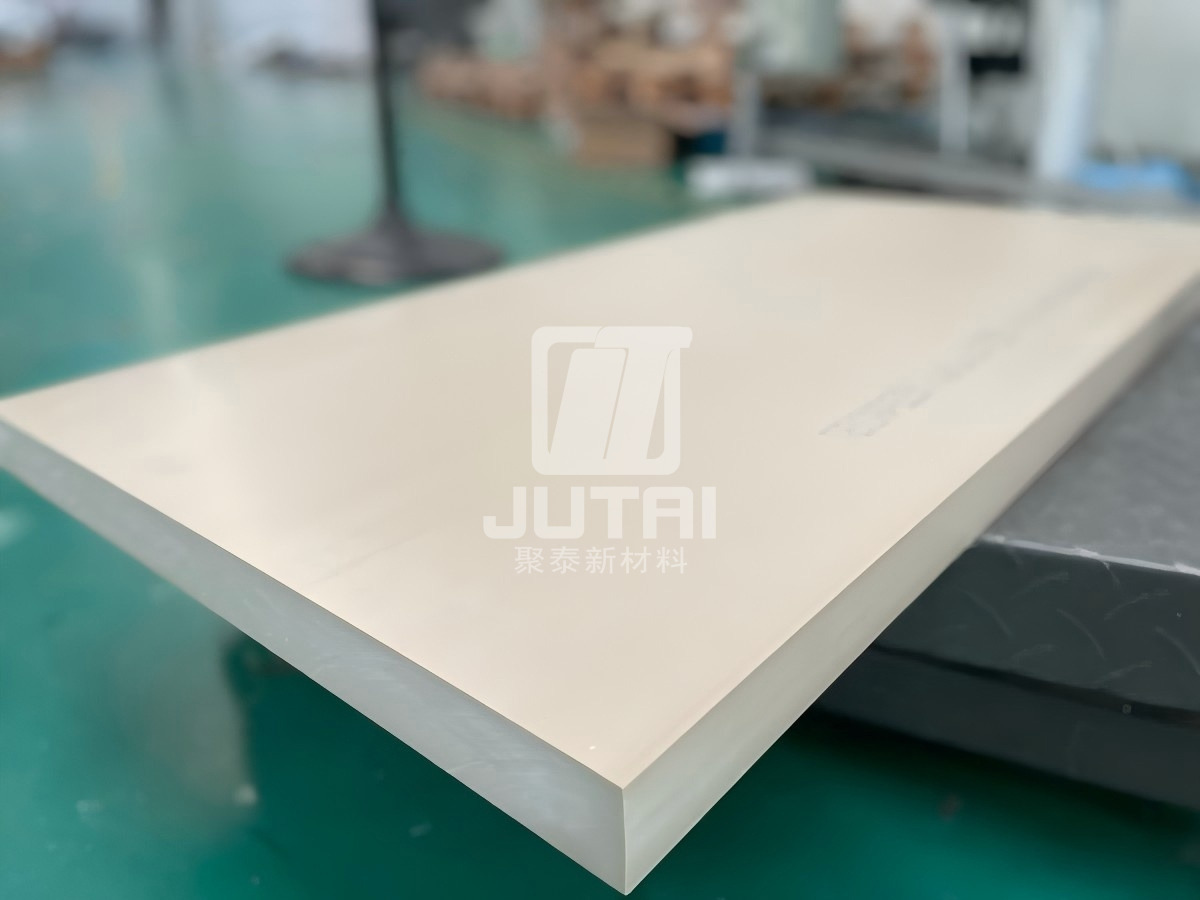
Thermal stability is the primary reason engineers select this polymer. The Continuous Use Temperature (CUT) serves as a reliable performance metric. You can operate these components continuously at 260°C (500°F) without significant degradation. They also withstand short-term thermal spikes up to 300°C (572°F). This resilience makes them ideal for engine compartments, semiconductor manufacturing, and downhole oil and gas equipment.
Understanding the Glass Transition Temperature (Tg) is equally critical. The material generally surpasses its glass transition phase around 143°C (289°F). Once it crosses this threshold, the polymer matrix undergoes a shift in mechanical behavior. It softens slightly and loses some structural rigidity. You must account for this behavioral shift when designing load-bearing structures intended for extreme heat.
To combat this softening, manufacturers often add reinforcing fibers. These reinforcements drastically improve the Heat Deflection Temperature (HDT). A thorough review of PEEK sheet properties reveals how glass or carbon fillers stabilize the matrix.
Heat Deflection Temperature Comparison by Material Grade
| Material Grade | Glass Transition (Tg) | Heat Deflection Temp (HDT) at 1.8 MPa | Thermal Expansion Behavior |
|---|---|---|---|
| Unfilled (Virgin) | 143°C (289°F) | ~152°C (305°F) | Highest expansion rate |
| 30% Glass-Filled | 143°C (289°F) | ~315°C (599°F) | Significantly reduced expansion |
| 30% Carbon-Filled | 143°C (289°F) | ~315°C (599°F) | Lowest expansion, highest rigidity |
Extreme temperature gradients introduce severe thermal expansion risks. When you design tight-fitting assemblies, you must calculate the exact clearances needed. If you ignore thermal expansion, constrained parts will buckle or crack under their own internal pressure. Filled grades minimize these dimensional stability risks.
Replacing metal requires extraordinary mechanical strength. You must evaluate load-bearing capabilities carefully. A standard PEEK plate provides excellent tensile and flexural strength. When you compare it to aluminum, the strength-to-weight ratio is highly favorable. This polymer handles immense pressure while shedding pounds from the overall assembly weight.
We must evaluate structural components across several dynamic loading dimensions:
Friction and wear profiles dictate success in moving assemblies. We often assess tribological performance for gears, bushings, and sliding mechanisms. In environments where liquid lubricants burn off or contaminate the product, inherent lubricity is vital. Specialized grades excel in these unlubricated sliding applications.
However, we must transparently discuss material limitations. This polymer is highly notch-sensitive. Sharp internal corners in your design concentrate stress and invite premature fractures. Always use generous radii on all machined corners. Furthermore, it exhibits potential brittleness under high-velocity impact. If your application involves sudden, violent strikes, specialized impact-modified polymers like polycarbonate might offer better energy absorption.
Selecting the raw polymer is only the first step. You must match the specific material grade to your exact failure risks. Manufacturers compound the base resin with different additives to alter its physical behavior.
By aligning the exact formulation to the environment, you ensure maximum operational life. Using an unfilled grade for a high-load bearing will result in rapid wear. Conversely, using a carbon-filled grade for a flexible seal will cause the part to snap.
Transforming a raw extruded blank into a precision component requires strict manufacturing controls. The annealing imperative is the most critical factor. Extruded plastics inherently harbor internal stress from the manufacturing process. If you machine the material heavily without managing this stress, the part will warp unpredictably.
Pre-machining and post-machining step-annealing are absolutely non-negotiable for holding tight tolerances. You must heat the material slowly in an oven, hold it at a specific elevated temperature, and cool it at a strictly controlled rate. This process relaxes the polymer chains. Skipping intermediate annealing cycles causes dimensional creep that can manifest weeks after the part leaves the CNC machine.
Tooling and coolant realities also demand attention. CNC machining generates significant friction and heat. Because this polymer acts as a thermal insulator, the heat transfers directly into the cutting tool. You need carbide or polycrystalline diamond (PCD) tooling to manage abrasiveness, especially when cutting carbon or glass-filled grades. Standard high-speed steel tools will dull instantly. Proper coolant flow removes heat and prevents the material from melting or gumming up the cutters.
Finally, you must navigate regulatory and compliance standards. Mission-critical industries require absolute material lot traceability. You must verify adherence to aerospace specifications like MIL-P-46183 and AMS 3699. For food processing machinery, verify FDA and USDA compliance. For medical devices, ISO 10993 certification guarantees biocompatibility. Request complete material test reports (MTRs) from your distributor before beginning any production run.
Evaluating this high-performance polymer requires a balanced assessment of thermal limits, mechanical loads, and chemical exposure. You must build a final decision matrix to match specific failure risks to the appropriate material grade. Virgin grades offer purity and chemical defense, while fiber-filled grades deliver extreme structural rigidity under heat.
Your next-step action should involve prototyping. We recommend procuring smaller sample blocks for preliminary CNC testing. This allows your machinists to test tooling setups and verify annealing schedules. Consult closely with a material distributor's engineering team to verify exact grade requirements and regulatory certifications before committing to bulk purchasing. Proper upfront validation guarantees long-term operational success.
A: Yes. While manufacturers typically supply plates stress-relieved, complex or aggressive machining requires intermediate annealing cycles to prevent warping and micro-cracking.
A: While PTFE can endure slightly higher absolute temperatures and harsh chemicals, PEEK is structurally superior, maintaining its mechanical strength and load-bearing capacity at high temperatures where PTFE would deform or cold-flow.
A: Despite broad chemical resistance, PEEK is vulnerable to concentrated sulfuric acid, nitric acid, and specific halogens (like chlorine or bromine) at high concentrations and temperatures.


