
Views: 0 Author: Site Editor Publish Time: 2026-08-30 Origin: Site


Specifying materials for extreme aerospace, medical, and automotive environments carries incredibly high stakes. Failure is simply not an option in these demanding fields. You need materials engineered for absolute survival. Here, polyetherimide bridges a critical gap. It acts as the perfect middle ground between standard engineering plastics and extremely expensive ultra-polymers like PEEK. Engineers often struggle to balance thermal performance requirements against strict project budgets. We created this guide to solve this exact problem. This clear, engineering-led evaluation framework will help your procurement and design teams succeed. You will learn how to match the right material grade and manufacturing process to your specific compliance needs. By the end, you can confidently navigate datasheets and select the optimal polymer for your most demanding applications. We will explore thermal standards, mechanical reinforcements, and crucial design rules to ensure your project’s success.
Every successful engineering project begins by matching material properties to real-world demands. You must look beyond basic data sheets. You need to understand how the material behaves under continuous stress. PEI resin excels in extreme environments, but you must evaluate its capabilities systematically.
Thermal stability often dictates material selection. You should first evaluate the Long-Term Thermal Index (RTI) and the Glass Transition Temperature (Tg). Polyetherimide boasts a Tg of 217°C. It maintains its structural integrity at continuous use temperatures up to 170°C. These metrics prove invaluable for under-the-hood automotive components.
Flammability standards present another major hurdle. Aerospace interiors and rail transit systems enforce strict safety codes. Polyetherimide offers inherent UL94 V-0 flame resistance. It achieves this without relying on toxic halogenated additives. Furthermore, it produces exceptionally low smoke and toxicity emissions during combustion. This makes it a premier choice for passenger cabin applications.
Modern applications expose plastics to harsh chemicals. You must analyze environmental resistance carefully. Polyetherimide strongly resists automotive fluids, hydrocarbons, and synthetic oils. It maintains its mechanical strength even after prolonged exposure to jet fuel and transmission fluids.
Common Mistake: We must acknowledge a critical limitation for full transparency. Highly alkaline environments degrade polyetherimide rapidly. Strong bases cause stress cracking and embrittlement. If your application involves continuous exposure to high pH solutions, other polymers will outperform it.
Healthcare applications demand flawless hygiene and patient safety. You must assess a material's suitability for harsh sterilization protocols. Polyetherimide withstands repeated autoclave sterilization cycles effortlessly. It also handles gamma radiation and Ethylene Oxide (EtO) exposure without degrading.
You must verify regulatory compliance for surgical instruments and reusable medical devices. Always ensure your chosen grade meets ISO 10993 and USP Class VI standards. These certifications guarantee biocompatibility. They ensure the material will not leach harmful toxins during bodily contact.
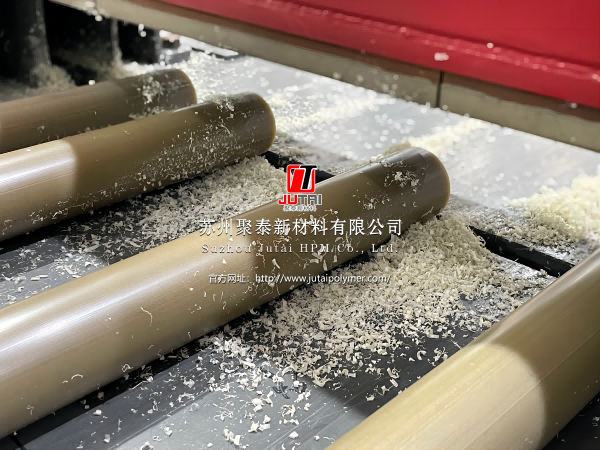
Selecting the correct base polymer is only the first step. You must then choose the right specific grade. Manufacturers heavily modify base resins to achieve distinct mechanical goals. The choice between unfilled and glass-filled variants drastically changes how you design and mold your parts.
Unfilled grades offer unique visual and mechanical benefits. They possess a natural amber tint. This provides excellent transparency for visual fluid inspection components. Unreinforced grades also offer superior impact flexibility compared to their glass-filled counterparts.
We highly recommend unreinforced grades for complex micro-molding. They flow easily into intricate mold cavities. This makes them perfect for tiny electrical connectors and delicate medical tubing components.
Structural applications require a massive performance leap. Integrating glass fibers completely transforms the polymer matrix. We highly recommend pei gf30 ultem 2300 for structural demands. Integrating 30% glass fiber dramatically increases tensile strength and overall rigidity. It also provides exceptional creep resistance under heavy, continuous loads.
Dimensional stability improves significantly with glass reinforcement. The coefficient of linear thermal expansion (CLTE) drops sharply. This lower CLTE makes glass-filled grades ideal for metal-replacement parts. They maintain tight tolerances across wide temperature fluctuations.
Navigating PEI resin specifications requires a sharp eye. You must scrutinize specific metrics to prevent end-product failure. Focus on the Melt Volume Rate (MVR) to gauge moldability. Review the Tensile Modulus to understand stiffness. Check the Notched Izod Impact to evaluate brittleness.
Table 1: Typical Property Comparison Between Unfilled and Glass-Filled Grades
| Property Metric | Unreinforced Grade | 30% Glass-Filled Grade |
|---|---|---|
| Tensile Strength (Yield) | 105 MPa | 165 MPa |
| Flexural Modulus | 3,300 MPa | 9,000 MPa |
| CLTE (Flow direction) | 5.0 x 10^-5 1/°C | 1.8 x 10^-5 1/°C |
| Visual Appearance | Transparent Amber | Opaque (Custom Colors) |
Engineers face a vast landscape of high-performance polymers. Choosing the right one requires a strict cost-to-performance analysis. You must compare materials both upward and downward to find the most efficient solution for your specific parameters.
PEEK reigns supreme in the ultra-polymer category. However, its premium price often breaks project budgets. Here, pei offers a brilliant alternative. It delivers approximately 80% of PEEK’s thermal and mechanical performance at a significantly lower unit price. This massive price reduction frees up capital for other engineering needs.
You must identify when upgrading to PEEK is strictly necessary. We recommend PEEK over polyetherimide in only a few scenarios. If your part faces extreme chemical exposure to strong bases, PEEK wins. If the component operates in continuous, high-speed wear and friction environments, PEEK remains the better choice. Otherwise, polyetherimide usually wins the performance-to-price battle.
Sometimes you need to step up from mid-range plastics. Polycarbonate (PC) and Polysulfone (PSU) are excellent materials. Yet, they hit hard limits in demanding environments.
A perfect material selection means nothing without proper manufacturing execution. Processing high-heat polymers requires specialized knowledge. You must design your parts and configure your machinery specifically for this demanding material.
Polyetherimide is highly hygroscopic. It aggressively absorbs moisture from the air. You must detail the absolute necessity of pre-drying the material. You need to reduce moisture levels below 0.02% before molding begins.
Best Practice: Use a desiccant bed dryer at 150°C for four to six hours. Failing to dry the material properly leads to catastrophic results. You will see severe splay marks, cosmetic defects, and critical molecular degradation. This moisture-induced brittleness will cause parts to fail in the field.
Standard injection molding machines often struggle with ultra-polymers. You must outline the requirement for high-temperature tooling. Barrel temperatures often need to exceed 350°C. Standard water cooling systems will not work.
You must use hot oil temperature controllers. Mold temperatures must remain between 135°C and 165°C to achieve proper crystallization. Cold molds freeze the material too quickly. This creates immense internal stresses and leads to warped parts.
You must address specific shrinkage rates during the design phase. Differential shrinkage poses a major challenge, especially in glass-filled grades. Glass fibers align in the direction of the polymer flow. This causes the part to shrink differently along its length versus its width. You must account for this in your initial mold design.
Specify generous draft angles to ease part ejection. We recommend at least 1 to 2 degrees of draft. Furthermore, maintain uniform wall thickness throughout the part. Thick sections cool slower than thin sections. Uneven cooling creates sink marks and severe molded-in stress. Coring out thick sections will save material and improve dimensional stability.
Chart 1: Standard Injection Molding DFM Parameters Summary
| Parameter Category | Recommended Specification Range | ||
|---|---|---|---|
| Drying Temperature | 150°C (300°F) | Drying Time | 4 - 6 Hours |
| Moisture Target | < 0.02% | Melt Temperature | 350°C - 400°C |
| Mold Temperature | 135°C - 165°C | Recommended Draft Angle | 1° - 2° Minimum |
Sourcing high-performance polymers carries inherent risks. The market contains many counterfeit and degraded materials. You must establish strict vetting protocols for your supply chain. Partnering with a trusted PEI resin supplier is critical for long-term production success.
Traceability prevents catastrophic failures. Ensure the supplier provides comprehensive Certificates of Analysis (CoA) with every shipment. You must guarantee authentic, non-degraded base materials. You need to distinguish between genuine SABIC ULTEM™ resins and subpar generic equivalents. Generic materials often exhibit inconsistent thermal properties and higher impurity levels. This inconsistency will ruin your medical and aerospace certifications.
Your supplier must grow with your production needs. Evaluate their lead times carefully. Ask about their Minimum Order Quantities (MOQs). A good partner will support small prototype runs and massive global rollouts. You must also assess their global inventory stability. Supply chain shocks can halt your production lines. Ensure your vendor has redundant warehousing strategies in place.
Do not settle for a simple transaction. Prioritize suppliers who function as engineering partners. Look for vendors who offer comprehensive material testing and DFM consulting. The best suppliers also provide custom compounding services. They can formulate custom colors, specific glass-fill ratios, or even carbon fiber blends to match your exact application requirements.
Choosing the right polyetherimide grade requires a delicate, calculated balance. You must weigh your thermal and mechanical thresholds against your tooling capabilities and strict unit costs. Navigating between unreinforced flexibility and glass-filled rigidity dictates your final product's success. Remember, proper moisture management and hot-tooling procedures remain non-negotiable for manufacturing excellence.
We advise decision-makers to take immediate action. Initiate a comprehensive material audit of your current standard plastics. Request updated datasheets for the shortlisted grades that match your thermal requirements. Finally, order sample batches today. Run prototyping tests and conduct thorough mold-flow analyses to guarantee your design is ready for high-volume production.
A: ULTEM™ is a registered trademark owned by SABIC. It represents the original, premium brand of polyetherimide. Generic polyetherimide uses the same base polymer chemistry but comes from different manufacturers. While generics often cost less, ULTEM™ generally guarantees tighter quality control, comprehensive regulatory certifications, and superior batch-to-batch consistency.
A: Standard grades exhibit only moderate UV stability. Continuous outdoor exposure can cause surface yellowing and a gradual loss of mechanical properties. If your application faces constant sunlight, you must apply secondary UV-resistant coatings. Alternatively, you should source specific, custom-compounded UV-stabilized grades from your supplier.
A: This grade demands extremely high melt temperatures, often exceeding 350°C. Standard machines struggle to maintain this heat consistently. Furthermore, the 30% glass fiber content is highly abrasive. It causes severe wear on standard molds and screws. You must use hardened steel tooling and hot oil temperature controllers to process it successfully.


