
Views: 0 Author: Site Editor Publish Time: 2026-09-22 Origin: Site


Neat (unfilled) polyphenylene sulfide serves as an exceptional baseline standard for extreme heat and chemical resistance. However, standard formulations often fall short when deployed in complex, multi-variable engineering environments. Upgrading to a custom compound introduces higher upfront costs, stringent Minimum Order Quantities (MOQs), and extended validation cycles. Engineering and procurement teams must carefully weigh these logistical drawbacks against the severe risks of component failure or compromised manufacturing yields. We wrote this guide to provide a clear, evidence-based decision framework. It helps technical buyers determine exactly when to stick with standard off-the-shelf grades. Furthermore, you will discover when the performance returns truly justify investing in a custom-engineered formulation. By understanding these thresholds, your team can balance material innovation with realistic production constraints.
Before exploring custom formulations, we must understand the baseline capabilities of the neat polymer. Standard, unfilled polyphenylene sulfide excels in harsh environments. It features a high melting point near 285°C. It inherently achieves a UL 94 V-0 flammability rating without additional halogenated flame retardants. Furthermore, it offers outstanding chemical inertness. It resists most acids, alkalis, and organic solvents even at elevated temperatures. For many basic applications, these inherent properties provide more than enough performance.
However, neat polymer possesses one primary vulnerability: brittleness. The material is highly crystalline. This high crystallinity drives its exceptional chemical resistance but severely limits its impact strength. When exposed to sudden mechanical shocks or dynamic loads, the unfilled polymer is prone to catastrophic cracking. This inherent brittleness remains the single most common driver for engineering teams to pursue custom compounding. They need to improve toughness without sacrificing the thermal ceiling.
You must establish a "good enough" threshold to avoid over-engineering your components. Standard grades remain perfectly sufficient for specific scenarios. Consider low-stress static components, basic electrical housings, and sensor covers. If your part simply sits in a hot, chemically aggressive environment without facing mechanical stress, standard grades work well. In these static applications, you do not need to absorb the MOQs and lead times associated with custom compounding.
Many components face dynamic loads, continuous vibration, or high-velocity impacts. Automotive under-hood components and industrial pump impellers serve as prime examples. Unfilled material often fails these mechanical stress tests. Transitioning to custom blends prevents catastrophic cracking. Engineers typically specify impact-modified or high-glass-fill formulations for these scenarios. Adding elastomer modifiers absorbs kinetic energy. Incorporating heavy glass fiber loadings distributes mechanical stress across the polymer matrix.
Injection-molding complex geometries introduces distinct manufacturing challenges. Glass fibers align in the direction of the melt flow during injection. This alignment creates anisotropic shrinkage. The part shrinks differently in the machine direction compared to the transverse direction. This differential shrinkage causes flat parts to warp. Custom compounding solves this issue. Formulating hybrid blends using both glass fibers and mineral fillers controls warpage. The mineral fillers promote isotropic shrinkage. They help you maintain incredibly tight dimensional tolerances on complex housings.
Standard material has very low surface energy. Adhesives, paints, and overmolding compounds struggle to bond with it. Assemblies often require secondary operations like adhesion bonding or environmental sealing. When standard grades fail these adhesion tests, customization becomes necessary. Compounders can add specific surface modifiers. These custom additives lower surface energy resistance. They improve bond strength significantly. Importantly, experienced compounders achieve this without sacrificing the core chemical resistance of the base polymer.
Electronic components increasingly require specialized properties like EMI/RFI shielding. Standard polymer acts as an electrical insulator. It also acts as a thermal insulator. High-density electronics need heat dissipation to survive. You can modify the polymer matrix to replace heavy metal components. Formulating PPS resin with carbon fiber or carbon nanotubes introduces electrical conductivity. Adding specialized ceramic or metallic fillers transforms the material into a thermally conductive plastic. This allows heat sinks to be injection molded directly.
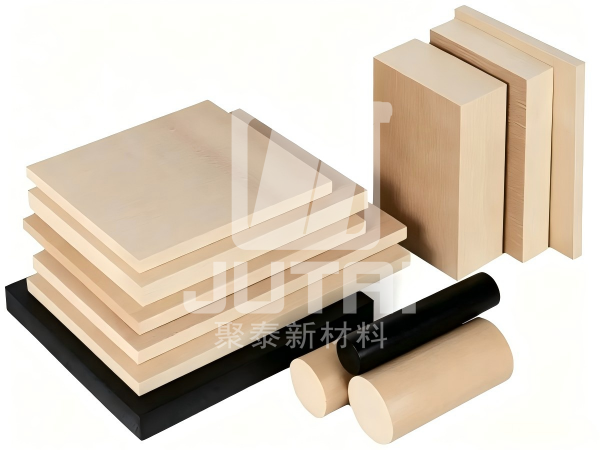
Modifying the base polymer involves balancing competing physical properties. Every additive introduces specific advantages and distinct trade-offs. You must evaluate these trade-offs against your unique application environments.
Glass fiber reinforcement represents the most common modification. Loadings typically range between 30% and 40% by weight. Adding this much glass dramatically increases tensile strength. It also pushes the Heat Deflection Temperature (HDT) well above 260°C. However, this extreme reinforcement comes with a severe downside. High glass content accelerates tooling wear during injection molding. Molds require hardened steel inserts. Small gates and runners will wear out quickly under the abrasive melt flow.
Mineral fillers offer a different set of advantages. Compounders use talc, calcium carbonate, or silica. Mineral fillers effectively reduce the overall material cost per pound. They also improve the surface finish of the molded part. As mentioned earlier, minerals reduce warpage by promoting uniform shrinkage. They are often blended with glass fibers to strike a perfect balance between strength and dimensional stability.
Elastomer blends tackle the brittleness problem directly. Impact modifiers increase overall toughness and elongation at break. They allow the material to flex slightly before failing. However, adding elastomers alters the thermal dynamics. Impact modifiers generally reduce the overall thermal ceiling. The continuous use temperature might drop. You must verify that the modified thermal limits still meet your operational requirements.
Reading and challenging technical data sheets (TDS) is a critical engineering skill. You must ensure that the tested PPS resin specifications align with actual operating environments. Data sheets can be misleading if misapplied. Keep these best practices in mind:
Material Modification Effects Chart
| Additive Type | Primary Benefit | Primary Trade-off | Ideal Application |
|---|---|---|---|
| Glass Fiber (30-40%) | Increases tensile strength & HDT | Accelerates tooling wear, warpage | High-load structural components |
| Mineral Fillers | Controls warpage, improves finish | Lowers impact resistance slightly | Flat pump housings, complex geometries |
| Elastomer Blends | Dramatically increases toughness | Lowers maximum thermal ceiling | Automotive parts facing vibration |
| Carbon Fiber | Adds electrical/thermal conductivity | Significantly increases material cost | EMI shielding enclosures |
Moving from a standard material to a custom blend involves distinct logistical and financial realities. You must calculate the upfront investments accurately. Custom compounding requires extensive R&D lead times. Formulating, testing, and validating a new blend takes months. Additionally, compounders impose Minimum Order Quantities (MOQs) for custom runs. You must commit to purchasing large volumes, which impacts inventory and cash flow. You need to verify if the long-term failure reduction justifies these initial hurdles.
Tooling and processing adjustments represent another significant implementation risk. Modifying the base polymer alters its melt flow index (MFI). Highly filled materials become much more viscous. They require higher injection pressures to fill the mold cavity. Furthermore, custom blends feature different shrinkage rates compared to neat grades. Your existing molds were likely cut for a specific shrinkage tolerance. If you switch to a custom blend, existing molds may require expensive steel-safe modifications. You might need to enlarge gates or redesign runner systems to accommodate the new material.
Regulatory and certification hurdles often catch engineering teams off guard. Customized resins frequently require re-certification. Neat polymer holds an inherent UL 94 V-0 flammability rating. If you add non-flame-retardant elastomers to improve impact strength, the material might lose this V-0 rating. You would then need secondary flame-retardant additives to restore compliance. Furthermore, if your product requires FDA food contact compliance or specific automotive OEM approvals, a custom blend resets the testing clock. You must budget time and capital for third-party laboratory testing to regain these essential certifications.
Selecting the right compounding partner dictates the success of your material upgrade. Do not settle for basic distributors. You need to look for a PPS resin supplier with robust in-house capabilities. Evaluate potential partners based on rigorous technical criteria. Follow this sequence to vet them properly:
Customizing your material formulation is a strategic investment, not a default upgrade. Standard grades offer incredible baseline heat and chemical resistance for most static applications. You should only pursue custom compounding when the cost of component failure outweighs the upfront formulation investment. Severe dimensional instability, catastrophic impact failures, and specialized conductivity needs firmly justify the transition.
Take immediate action by initiating a material audit of your current field failures. Define your clear performance gaps meticulously. Identify exactly where standard grades fall short. Once your engineering limits are defined, reach out to a vetted compounding partner. Request a small pilot batch for initial tooling trials. By moving methodically from standard to custom, you secure long-term operational reliability while controlling manufacturing risks.
A: Industry averages for custom compounded batches usually range from 1,000 to 5,000 pounds. This depends heavily on the compounder's extrusion equipment and the complexity of the specific additives required.
A: Most custom compounds are designed explicitly for injection molding. However, specific formulations can be extruded into a pps sheet or a solid rod for CNC machining. Filler dispersion must be carefully managed during extrusion to prevent internal voids.
A: The base pps polymer remains inherently chemically inert. However, aggressive acids can attack certain fillers, like specific glass fibers or calcium carbonate. You must select fillers carefully based on your target chemical environment.
A: Neat polymer is inherently UL 94 V-0. Adding non-flame-retardant modifiers, such as impact elastomers, can compromise this rating. You often must formulate with secondary flame-retardant additives to maintain strict flammability specifications.


