
Views: 0 Author: Site Editor Publish Time: 2026-08-26 Origin: Site


High-performance polymers demand high-precision procurement. Submitting a vague Request for Quote (RFQ) for PEEK resin results in padded pricing, extended lead times, or non-compliant materials. You face significant risks when sourcing this premium engineering thermoplastic without strict parameters. Suppliers need exact technical, regulatory, and volume data to provide accurate manufacturability assessments. Without this clarity, your project margins remain vulnerable to unpredictable scrap rates and hidden rework fees. A strict, comprehensive RFQ protects your bottom line and ensures regulatory compliance. It also filters out unqualified vendors from the start. You will learn how to structure your procurement requests to eliminate ambiguity. We will cover exact material grade designations, critical tolerance callouts, and mandatory certification requirements. By mastering these PEEK resin specifications, you secure reliable vendor partnerships and superior part quality. Your procurement process will become a strategic advantage rather than a guessing game.
Specificity reduces cost: Explicitly stating grade, filler percentage, and form prevents suppliers from padding quotes to account for material uncertainty.
Compliance is non-negotiable: Medical, aerospace, and semiconductor applications require precise certification callouts (e.g., FDA, RoHS, AS9100) at the RFQ stage.
Manufacturing intent matters: Detailing whether the material is for CNC machining, injection molding, or specific components like PEEK connectors alters the required material specifications and tolerances.
High raw material cost defines this polymer category. This financial reality means scrap impacts your unit economics heavily. Rework destroys profit margins quickly. Ambiguous RFQs lead directly to misaligned supplier expectations. Vendors usually assume the worst-case manufacturing scenario. They inflate their prices to cover potential machining difficulties. Precise documentation eliminates this costly guesswork entirely. You force suppliers to quote based on hard facts rather than rough estimations.
An ideal RFQ generates highly structured and comparable responses. We look for three specific success criteria when evaluating vendor quotes:
Itemized cost breakdowns separating material, tooling, and labor expenses.
Exact lead times covering raw material procurement through final delivery.
Confirmed material availability for immediate production scheduling.
Highlighting specific thermal requirements upfront prevents late-stage failures. Prototyping exposes material flaws very quickly. First article inspection (FAI) often catches these errors early. However, discovering the wrong grade during FAI wastes several weeks. You lose valuable market time. Specifying mechanical baselines protects your overall project timeline. It guarantees engineers test the correct polymer state from day one. You establish a clear standard for acceptance. If a supplier deviates, you have written proof of their non-compliance.
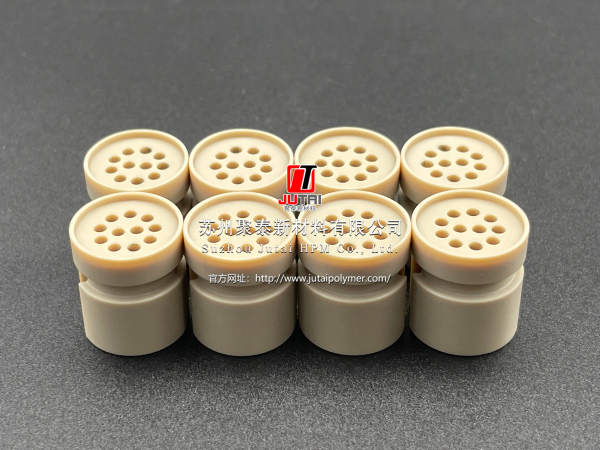
Building a robust RFQ requires meticulous attention to material properties. You must define exactly what arrives at your loading dock.
Specify the exact polymer state clearly. Unfilled virgin grades behave differently than filled composite grades. Glass-filled (GF) variants add substantial structural rigidity. Carbon-filled (CF) mixtures improve wear resistance significantly. Bearing grades blend PTFE directly into the polymer matrix. They lower friction coefficients drastically for moving parts. Your RFQ must state the required filler percentages precisely. Do not leave room for supplier interpretation.
List acceptable commercial equivalents if your design allows them. Some projects strictly require a specific brand formulation. If so, clearly state "No substitutions allowed" in bold text. This stops vendors from quoting cheaper, inferior alternatives. It protects your original design intent and engineering calculations.
Differentiate between injection molding pellets and extruded stock shapes. Pellets require specific melt flow characteristics for heated processing. Stock shapes include solid rods, flat sheets, and hollow tubes. Machining operations rely heavily on these pre-formed shapes.
For stock shapes, state nominal dimensions clearly. Include required oversized allowances for safe machining. Machinists need extra material to reach final precision dimensions. You must also define acceptable dimensional tolerances for the raw stock. Suppliers extrude rods using varying techniques. Slight variations affect your automated machining setup. Tight tolerances on raw stock reduce your internal prep time. Always outline these expectations directly in the procurement document.
Include mandatory minimums for physical performance. Specify the continuous use temperature limit. Outline the necessary tensile strength required under load. Define dielectric properties based on the final end-use environment. Suppliers need these baselines to verify material suitability before accepting the job.
Baseline Thermal and Mechanical Property Matrix
Grade Category | Continuous Use Temp | Tensile Strength | Primary Advantage |
|---|---|---|---|
Unfilled (Virgin) | 250°C to 260°C | ~90 to 100 MPa | High purity, elongation |
30% Glass-Filled | 250°C to 260°C | ~150 to 170 MPa | Dimensional stability |
30% Carbon-Filled | 250°C to 260°C | ~200 to 220 MPa | Stiffness, wear resistance |
The way you intend to process the material changes the procurement requirements completely.
Clarify if the request covers raw material supply or finished machined parts. The chosen processing method dictates specific resin parameters. Injection molding demands precise melt flow index (MFI) values. High-cavitation molds require lower viscosity resins to fill completely. Conversely, CNC machining requires stress-relieved extruded shapes. If your facility processes peek components daily, you understand the importance of dimensional stability during cutting. The RFQ must reflect your exact manufacturing methodology.
When you machine these high-performance polymers, tool wear becomes a significant factor. You must ask the supplier if the material requires specialized carbide or diamond-tipped tooling. Providing the vendor with your exact machining capabilities helps them recommend the right extruded shape. It reduces unnecessary milling time. Furthermore, stress relief is paramount. Extrusion introduces directional stress into the plastic. If your supplier does not anneal the stock shape properly, your parts will bow after the first cut. Always specify a certified annealing cycle.
Define critical-to-quality (CTQ) dimensions explicitly on your attached drawings. Do not assume standard tolerances apply. Specify surface roughness (Ra) requirements clearly. Sealing surfaces demand stringent smoothness to prevent leaks. Fluid transfer applications fail quickly if microscopic scratches exist.
Common surface finish best practices include:
Specifying Ra 0.8 µm or better for dynamic sealing faces.
Allowing rougher finishes (Ra 3.2 µm) for non-critical structural outer housings.
Calling out specific polishing steps if optical clarity is necessary.
If you source custom components like peek connectors, detail the exact thread specifications. Outline all mating tolerances for multi-part assemblies. Specify post-processing needs meticulously. Annealing relieves internal stress after heavy machining operations. Mention these thermal steps to ensure vendors quote the full manufacturing cycle. Skipping annealing instructions leads to warped parts during field deployment.
Highly regulated industries demand flawless paperwork. Missing documents render expensive parts entirely useless.
Industry-specific certifications drive compliance across global supply chains. Medical applications demand strict ISO 13485 standards. They usually require USP Class VI biocompatibility testing. FDA compliance remains mandatory for any direct patient contact. Implantable-grade verification requires extensive, heavily audited documentation.
Aerospace and industrial sectors follow different rules. AS9100 governs aerospace manufacturing quality systems. FAR 25.853 dictates strict flammability standards for aircraft interiors. NORSOK M-710 regulates explosive decompression resistance for oil and gas sealing components. List these acronyms clearly in your initial request.
Mandate a formal Certificate of Analysis (CoA) per shipment. Require a signed Certificate of Conformity (CoC) matching your purchase order. Demand full lot traceability from raw monomer to finished pellet. Do not accept materials lacking these fundamental paper trails. Missing lot numbers complicate failure investigations later.
Traceability goes beyond simply having a piece of paper. It means you can track a failed part in the field back to the exact hour of production. For aerospace components, this level of detail is a strict legal requirement.
Specify your incoming testing protocols. State if third-party material verification is necessary before acceptance. Clarify if destructive testing applies to a sample batch. Outline any specific non-destructive evaluation (NDE) required upon delivery. Ultrasonic testing often detects internal voids inside thick extruded rods. Calling out these tests early prevents disputes over rejected shipments.
When specifying your testing protocols, consider adding differential scanning calorimetry (DSC) to verify the crystallinity of the received material. High crystallinity ensures maximum chemical resistance. If the supplier cools the rod too quickly during extrusion, the material remains amorphous. It will fail under chemical exposure. Your RFQ should specify acceptable crystallinity percentages if your application involves harsh solvents.
Beyond technical specifications, you must evaluate the commercial viability of your chosen vendor.
State your Minimum Order Quantities (MOQs) clearly. Outline your Estimated Annual Usage (EAU) to secure volume pricing tiers. Clarify delivery schedule expectations. Decide between staggered monthly releases versus a single bulk shipment. Staggered deliveries improve your cash flow and reduce warehouse space needs. However, single shipments often secure deeper freight discounts.
Scalability is another crucial factor. You might only need fifty kilograms for prototyping today. However, if your product launches successfully, you could need five thousand kilograms next year. Does your chosen vendor have the compounding capacity to scale with you? Ask for their maximum monthly output limits. Investigate their raw monomer supply chain. Do they rely on a single source for their base chemicals? Supply chain redundancy protects you from global shortages.
Packaging matters significantly for hygroscopic materials. This polymer absorbs moisture quickly from ambient air. Specify moisture-barrier packaging requirements. Pellets need foil-lined, vacuum-sealed bags. This prevents hydrolysis during high-temperature molding. Wet resin causes brittle parts and severe visual defects. You must explicitly reject standard cardboard containers lacking protective liners.
Require the PEEK resin supplier to provide their historical defect rate. Measure this in parts per million (PPM). Ask for contractual lead-time guarantees. Establish rigid escalation procedures for non-conforming materials. Assess their internal production capabilities thoroughly. Do they have proper desiccant material drying equipment? How do they prevent cross-contamination between different polymer families? Asking these questions upfront separates premium compounders from generic brokers.
A well-architected RFQ moves the procurement conversation from theoretical pricing to actionable, binding commitments. You protect your engineering intent by detailing exact grades, tolerances, and certifications. We highly recommend treating your RFQ as the very first step in quality control. The more rigid your specifications, the faster you can identify vendors capable of meeting your exact standards. Taking shortcuts during the quoting phase always leads to expensive downstream corrections. Start standardizing your requests today. Download a standardized RFQ checklist or contact our engineering team to review your material specifications before final submission.
A: Medical-grade variants require stringent biocompatibility testing, such as USP Class VI. They mandate cleanroom manufacturing traceability. These strict requirements significantly impact the overall cost. Industrial grades focus on mechanical strength and chemical resistance without the heavy regulatory paperwork needed for human implantation or fluid contact.
A: You should only allow substitutions if you provide explicit performance thresholds. Require standard approval of the substitution's Technical Data Sheet (TDS) before purchasing. Ensure the alternative matches your baseline tensile strength, continuous use temperature, and chemical resistance. Never accept a blind substitution without engineering review.
A: Proper specification ensures the supplier utilizes foil-lined, vacuum-sealed packaging. Failure to mandate this specific packaging can result in brittle parts. It also causes processing failures due to moisture absorption. Hydrolysis during high-temperature injection molding destroys the polymer's mechanical properties completely.
A: Lead times vary heavily based on form and grade. Standard unfilled stock shapes may quote within just a few days. However, custom-compounded pellets or complex machined parts, like high-tolerance connectors, often require four to eight weeks for final delivery.


