
Views: 0 Author: Site Editor Publish Time: 2026-07-25 Origin: Site


Aerospace and automotive engineering teams face continuous pressure today to push the boundaries of modern design. They must consistently replace heavy metal components with lightweight thermoplastics to maximize efficiency. This critical transition drives extended electric vehicle battery ranges and dramatically improves aircraft fuel economy. However, engineers cannot simply swap materials without careful consideration. They must secure this weight reduction without compromising thermal stability, structural integrity, or strict fire safety compliance.
Fortunately, PEI sheet—widely recognized in the industry by commercial brands like Ultem—offers a highly effective solution. It stands out as a leading high-performance polymer. It actively bridges the difficult gap between standard engineering plastics and heavily cost-prohibitive ultra-polymers.
This article provides an objective, data-backed evaluation framework. We aim to help dedicated engineers and procurement managers navigate material selection confidently. You will discover exactly how to determine if this specific polymer is the correct specification for your highly demanding under-hood, interior, or structural application.
Thermal & Safety Baseline: PEI offers a Continuous Service Temperature (CST) of 170°C (338°F) and is inherently flame-retardant (FAR 25.853 and UL94 V-0 compliant) without toxic halogenated additives.
Weight Optimization: With a low density of ~1.27 g/cm³, replacing metal with PEI significantly reduces component weight, critical for EV range and aircraft fuel efficiency.
Cost-to-Performance Pivot: PEI is often the logical choice when a project requires extreme performance but cannot justify the premium cost or difficult machining profiles of PEEK or PAI.
Processing Nuance: While highly machinable and thermoformable, successful PEI implementation requires strict thermal management (annealing) and specific tooling strategies.
Modern vehicle design demands aggressive and continuous weight reduction. Engineers constantly seek out low-density materials to extend operational limits. A standard PEI plastic sheet delivers a remarkable physical density of roughly 1.27 g/cm³. We often contrast this directly against standard aerospace-grade aluminum, which typically hovers around 2.7 g/cm³. Switching to this advanced polymer effectively cuts overall component weight by more than half. Furthermore, you retain a highly comparable strength-to-weight ratio. This unique balance makes it indispensable for structural mounting brackets, cabin seating frames, and interior structural paneling.
Regulatory barriers in the aerospace sector remain incredibly strict. Materials must pass rigorous fire and safety testing protocols. A flame retardant PEI sheet achieves this crucial compliance structurally. It inherently meets severe FAR 25.853 aviation standards and UL94 V-0 flammability ratings. Many competing standard plastics rely entirely on toxic halogenated additives to resist fire. These heavy chemical additives often degrade the polymer matrix over time. They also release dangerous, blinding smoke during active combustion. Polyetherimide avoids this fundamental problem completely. Its core molecular structure inherently resists ignition and severely minimizes dangerous smoke generation.
Mechanical parts frequently operate in harsh, unforgiving environments. We must constantly evaluate how synthetic materials interact with caustic operational fluids. Polyetherimide demonstrates excellent long-term resistance to standard automotive fluids. It easily withstands prolonged, direct exposure to engine hydrocarbons, synthetic oils, and radiator coolants. Aerospace engineers also highly value its distinct resistance to aggressive aviation hydraulic fluids, such as Skydrol. However, transparent material limitations do exist. You should avoid exposing this polymer to specific polar chlorinated solvents. These aggressive chemicals can induce rapid stress cracking when the part remains under continuous mechanical load.
Clear thermal boundaries prevent dangerous engineering misapplications. Technical teams must deeply understand two critical temperature metrics before authorizing a design. The Glass Transition Temperature (Tg) for this polymer sits at approximately 217°C (423°F). Beyond this exact point, the material gradually loses its rigid mechanical structure and becomes rubbery. More importantly, we rigorously define the realistic Continuous Service Temperature (CST) at 170°C (338°F). Operating at or below the CST ensures long-term, multi-year reliability. Exceeding these baseline thresholds causes rapid structural deformation.
Precision engineering demands functional parts that permanently hold their designed shape. Specified high temperature PEI material maintains exceptional mechanical integrity. It strongly resists physical creep under sustained mechanical loads, even when operating at heavily elevated temperatures. This dimensional stability is absolutely critical for tight-tolerance aerospace avionic housings. These complex components cannot warp, twist, or shift over thousands of pressurized flight hours.
Electrical insulation capabilities matter immensely in contemporary design. High-voltage power systems require highly reliable insulators to prevent catastrophic arcing. Polyetherimide boasts outstanding dielectric strength. It effectively blocks stray electrical currents while simultaneously enduring high localized thermal loads. This unique combination frames its absolute necessity in modern multi-electric aircraft architectures. EV battery systems also rely heavily on these specific insulating properties to maintain overall passenger safety and prevent thermal runaway events.
Fundamental Material Properties Table | ||
Property | Standard Value | Testing Standard |
|---|---|---|
Density | 1.27 g/cm³ | ASTM D792 |
Tensile Strength (Yield) | 105 MPa (15,200 psi) | ASTM D638 |
Continuous Service Temp (CST) | 170°C (338°F) | UL 746B |
Glass Transition Temp (Tg) | 217°C (423°F) | ASTM D3418 |
Dielectric Strength | 33 kV/mm (830 V/mil) | ASTM D149 |
Flammability Rating | V-0 @ 0.4mm thickness | UL94 |
Different industries leverage this material to solve entirely different engineering bottlenecks. We can clearly divide its primary utilization into two distinct commercial sectors.
Aerospace Applications:
Interiors: Design engineers heavily utilize thermoformed cabin panels, galley structures, window reveals, and lavatory components. Strict Flame, Smoke, and Toxicity (FST) compliance and severe lightweighting mandates drive these procurement decisions.
Avionics: You will frequently find this rigid polymer inside avionics housings, flight data recorder enclosures, and radar radomes. Unmatched dielectric strength and high structural rigidity make it ideal for protecting highly sensitive navigation electronics.
Deep Space: Satellite designers routinely specify unique aerospace PEI material grades for high-frequency antenna substrates. Its remarkably low outgassing properties prevent lens fogging and severe equipment contamination in the unforgiving vacuum of space.
Automotive Applications:
EV Infrastructure: The global electric vehicle boom requires highly advanced, durable insulators. Manufacturers aggressively use this material for EV battery cell insulators, high-voltage busbar connectors, and integrated thermal management fluid components.
Under-the-Hood: Internal combustion and hybrid engines present brutally hot environments. Engineers frequently machine sensor housings, transmission thrust washers, and internal pump impellers from this polymer. These functional parts demand high hydrocarbon resistance alongside strict dimensional stability during severe, daily thermal cycling.
No single material solves every engineering challenge perfectly. We must routinely compare advanced polymers against each other to find the optimum balance between structural performance and project budgets.
Polyetheretherketone (PEEK) clearly wins on absolute extreme thermal resistance. It reliably operates continuously up to 250°C and easily shrugs off extreme chemical wear. However, PEEK remains massively expensive. It heavily impacts overall project budgets and strains procurement limits. We highly recommend polyetherimide if your specific application stays strictly under 170°C. It offers major value engineering benefits. You capture nearly all the vital structural advantages at a mere fraction of the upfront raw material cost.
Alternatively, Polyamide-imide (PAI), widely known in the industry as Torlon, offers vastly superior compressive strength. It handles extreme friction and heavy metal bearing loads brilliantly. Yet, PAI suffers from a major fundamental flaw. It features exceptionally high moisture absorption. This hygroscopic nature demands extensive, highly controlled dry-room storage. PAI also requires an incredibly expensive, multi-day post-curing baking process just to achieve its full advertised strength. Conversely, polyetherimide wins easily in hydrolytic stability. It withstands heavy pressurized steam and direct hot water exposure without degrading structurally. It also provides excellent out-of-the-box machinability without complex post-curing chemistry.
Advanced Polymer Comparison Chart | |||
Comparison Metric | PEI (Polyetherimide) | PEEK (Polyetheretherketone) | PAI (Polyamide-imide) |
|---|---|---|---|
Thermal Limit (CST) | 170°C | 250°C | 260°C |
Chemical Resistance | Excellent (Vulnerable to polar solvents) | Outstanding (Near universal) | Good (Vulnerable to strong bases) |
Moisture Absorption | Very Low (Hydrolytically stable) | Very Low | High (Requires dry storage) |
Machining Complexity | Moderate (Requires annealing) | Moderate to High | Very High (Requires post-curing) |
Relative Cost | Moderate to High | Extremely High | Extremely High |
Transitioning from a digital CAD file to a physical component requires significant manufacturing expertise. Machine shops must adapt their standard tooling strategies to handle this resilient polymer successfully.
Standard CNC machining requires careful, deliberate adjustments to prevent part failure:
Tooling Selection: Machinists must utilize sharp, solid carbide tools exclusively. Standard high-speed steel (HSS) dulls rapidly against this surprisingly rigid material. Carbide easily counteracts the inherent material stiffness and significantly reduces rapid tool wear.
Thermal Control: Friction heat builds up remarkably quickly during active cutting. We must highlight the absolute necessity of flooding the cut with water-soluble coolants. Operators should always combine cooling fluids with moderate, controlled feed rates. This proactive strategy entirely prevents localized surface melting and smearing.
Chip Management: The heavy cutting process generates fine, notoriously difficult chips. They rarely break cleanly. Proper, high-pressure extraction systems keep the critical cutting path clear and prevent dangerous tool binding.
We must also detail the underlying, invisible risk of residual stress. Machined or aggressively thermoformed parts naturally accumulate internal mechanical stresses during production. These hidden forces heavily invite premature part failure once deployed. We strongly emphasize that post-fabrication annealing remains a strictly critical step. Exposing the finished part to a controlled heating and slow cooling cycle releases these trapped forces safely. This vital thermal process directly prevents sudden environmental stress cracking in the field.
Finally, you must accurately align your material grade with structural expectations. We warn against using standard unfilled stock if your design requires extreme, unyielding stiffness. Engineers often suggest moving to 30% glass-filled alternatives for maximum possible rigidity. However, you must carefully note a distinct engineering trade-off here. Glass-filled grades dramatically increase material brittleness upon impact. They also accelerate CNC cutting tool wear exponentially, forcing frequent tool replacements.
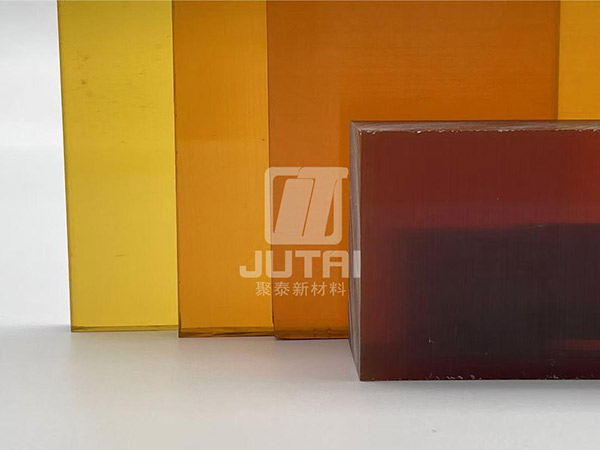
Effective material sourcing begins with distinguishing basic chemical formulations. A general-purpose Ultem PEI sheet usually falls broadly under the 1000 series classification. This completely unfilled grade delivers high mechanical strength, distinct amber transparency, and excellent general performance. Alternatively, highly specialized aerospace engineering requires the much stricter 9085 grade. Manufacturers heavily optimize the 9085 formulation specifically to meet rigorous aviation FST regulations. It also inherently offers slightly better impact tolerances for highly dynamic flight environments.
Procurement teams play a deeply vital role during the final vetting stages. You simply cannot buy the absolute cheapest polymer block available online. Buyers must rigorously verify comprehensive lot traceability to ensure long-term manufacturing consistency. National defense and sensitive global aerospace projects legally mandate strict ITAR compliance from the vendor. Finally, you must actively demand official raw material certifications. Legitimate, established suppliers will readily provide detailed documentation proving FDA, RoHS, and FAA FAR 25.853 compliance upon initial request.
This incredibly versatile polymer sheet stands as the definitive, intelligent choice for demanding mechanical engineers. It perfectly serves highly complex applications trapped uncomfortably between the low thermal limits of standard polycarbonates and the extreme financial cost of premium ultra-polymers. By specifying this material, you gain unmatched structural fire safety, profound component weight reduction, and exceptionally stable dielectric properties.
Do not finalize your structural design without meticulously verifying the physical data first. We strongly prompt every engineer and technical buyer to request official technical data sheets (TDS) immediately. Compare these specific physical grade properties directly against your native 3D CAD stress simulations. Finally, reach out to your vetted supplier and request physical material samples for prototype CNC machining today.
A: A standard sheet offers a Continuous Service Temperature (CST) of 170°C (338°F) for long-term reliable operation. It reaches its Glass Transition Temperature (Tg) at approximately 217°C (423°F), after which it loses structural rigidity.
A: Yes. Ultem is simply the most widely recognized commercial brand name for the polyetherimide polymer. It was originally developed and patented by GE Plastics, and the brand is currently owned and manufactured by SABIC.
A: Yes, we strongly recommend it. Annealing involves a controlled heating and cooling cycle that releases internal residual stresses generated during machining. This critical step prevents environmental stress cracking and ensures long-term dimensional stability.
A: It offers a massive dual benefit. You achieve significant weight reduction—cutting density by more than half compared to aluminum—while inherently maintaining strict FAA FST (Flame, Smoke, Toxicity) compliance without needing heavy secondary fire-retardant coatings.


