
Views: 0 Author: Site Editor Publish Time: 2026-02-02 Origin: Site


Polyetherimide (PEI) possesses excellent thermal, mechanical, and electrical properties, securing its place in high-performance applications across automotive, aerospace, industrial, and other sectors.
Explore Polyetherimide in detail, including its key properties (mechanical, thermal, electrical, etc.), and understand what makes it an ideal choice for high-end engineering applications. Additionally, learn about its production process and the conditions for processing this polymeric material. Let's start by understanding the basic characteristics of PEI.

PEI Improves the Processability of PI
Polyimides are a relatively new class of specialty plastic materials characterized by high strength-to-weight ratio, thermo-oxidative stability, excellent mechanical properties, high-temperature resistance, and more.
The characteristic group of polyimides is the imide or -C=ONC=O- group.
Polyetherimide was developed to overcome challenges associated with polyimides, namely that this polymer family is not easily melt-processable, and finished parts tend to be quite expensive.
Introducing appropriate ether linkages into the polyimide molecular chain provides sufficient flexibility to achieve good melt processability while retaining the excellent mechanical and thermal properties characteristic of aromatic imides.
Imide groups impart high-temperature performance.
Ether groups allow for melt processing.
Polyetherimide was initially developed by General Electric (now known as SABIC) in 1982 under the trade name ULTEM™ resin.

Molecular Structure of Polyetherimide (PEI)
Today, PEI is available from several suppliers, such as: SABIC, RTP Company, Lehmann & Voss, Quadrant, PolyOne, etc.
Polyetherimide (PEI) is an amorphous engineering thermoplastic known for its high-temperature resistance and outstanding mechanical and electrical properties.
Molecular Formula: [C₃₇H₂₄O₆N₂]
Molecular Weight: 592.61 g/g-mol
This high-performance polymer also features high tensile strength, good flame retardancy, and low smoke emission, making it an ideal material for automotive, electrical, medical, and other industrial applications. Polyetherimide's high-temperature resistance is competitive with polyketones, polysulfones, and polyphenylene sulfide.
Synthesis of Polyetherimide
PEI is produced via a condensation polymerization reaction between a bisphenol A dianhydride, such as a tetracarboxylic dianhydride (produced from the reaction of bisphenol A and phthalic anhydride), and a diamine, such as m-phenylenediamine.

Early laboratory processes involved expensive and difficult synthesis. Further development led to a series of breakthroughs, resulting in a simplified and cost-effective production process. The final step of this process involves the imidization of the dianhydride with m-phenylenediamine, as shown in the diagram above. PEI has a Tg of 217 °C.
Polyetherimide (PEI) is an engineering thermoplastic known for its high-temperature resistance, outstanding mechanical properties, and excellent electrical performance.
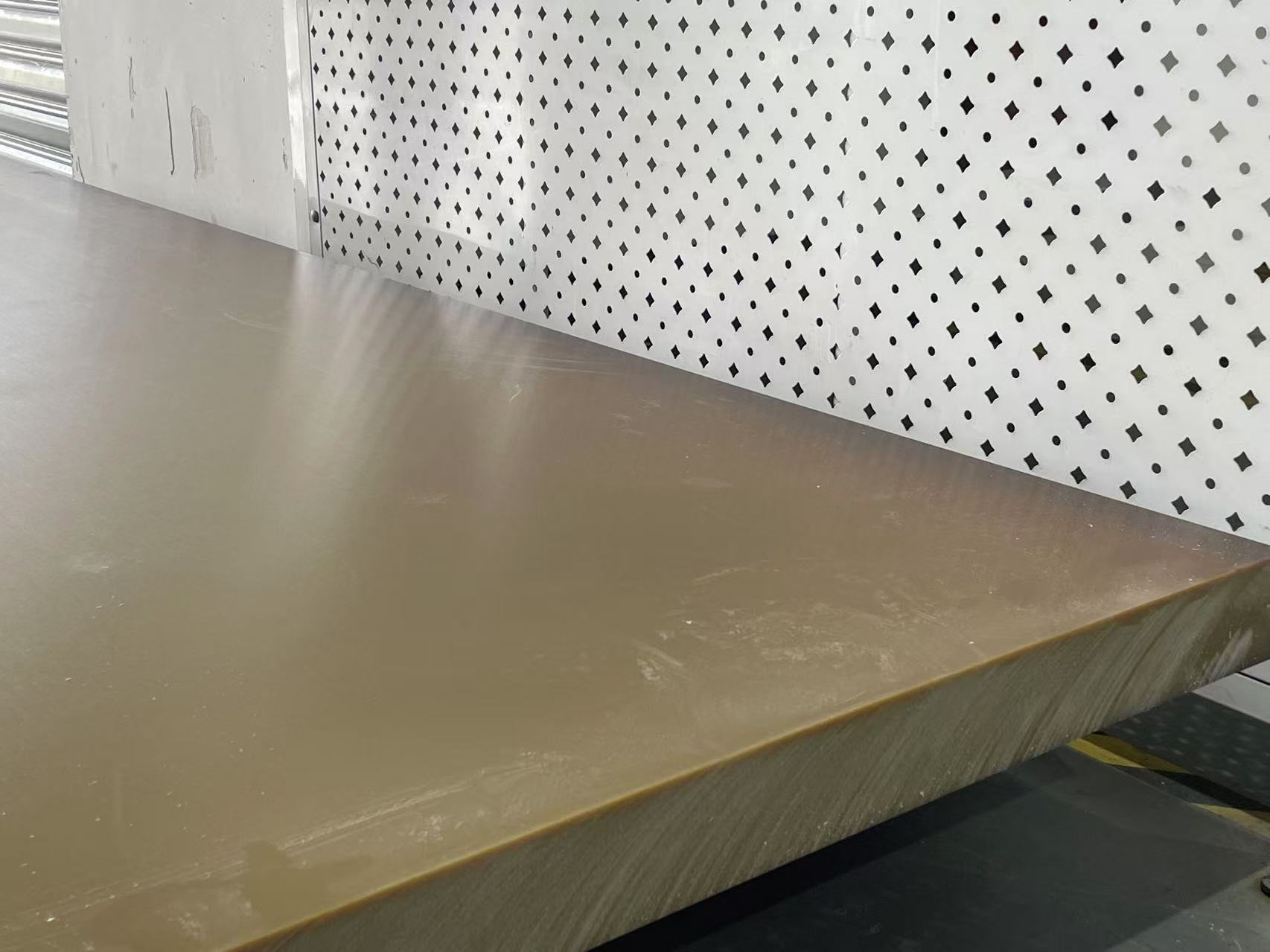
Key Properties of PEI
The fundamental and key characteristics of Polyetherimide have already been discussed. Beyond these, various other properties need to be considered before selecting a specific thermoplastic for a desired end-use application.
PEI is an amorphous thermoplastic resin with amber translucency.
The resin is characterized by a high flexural temperature (200°C at 264 psi), high tensile strength and flexural modulus (480,000 psi), and good retention of mechanical properties at elevated temperatures.
It offers a unique combination of high specific strength, stiffness, flexibility, and excellent dimensional stability.
Furthermore, the resin exhibits good electrical properties, remaining stable over a wide range of temperatures and frequencies, including microwave frequencies.
It has good UV resistance and weatherability.
PEI is inherently flame retardant without the need for additives.
It has a high Limiting Oxygen Index (LOI) of 47, and combined NBS smoke chamber results show the lowest specific optical density among all unfilled thermoplastics.
Polyetherimide is resistant to alcohols, acids, and hydrocarbon solvents but is soluble in partially halogenated solvents.
PEI also exhibits good hydrolytic stability.
Most PEI grades have a UL94 flame retardancy rating of VTM-0 and comply with FDA standards, EU food contact standards, and ISO10993 standards (in natural color).
Glass reinforcement offers higher rigidity and dimensional stability while maintaining many of the useful properties of base PEI. Glass reinforcement provides products with an excellent strength-to-weight ratio and higher tensile strength.

Comparison of Polyetherimide (PEI) Properties with Sulfone Polymers
Limitations Associated with PEI
Very high cost – suitable for demanding applications.
Low colorability.
Attacked by polar chlorinated solvents, aromatic hydrocarbons, acetates, etc., leading to stress cracking (refer to the chemical resistance table comparing PEI and sulfone polymers below).
Requires long drying times before processing.
Requires hot molds during injection molding.

Chemical Resistance Comparison


