
Views: 0 Author: Site Editor Publish Time: 2026-10-02 Origin: Site


In sub-nanometer node semiconductor manufacturing, even parts-per-trillion contamination can cause devastating yield losses. Minor material degradation inside fluid handling systems often cascades into catastrophic facility downtime. You simply cannot afford substandard polymers in these critical pathways. Fabs constantly transition to highly aggressive chemistries during complex wet processing steps. Process temperatures continue to rise rapidly. Standard fluoropolymers frequently fail to meet the stringent purity baselines required today. They struggle to maintain the physical durability needed for advanced etching and rigorous wafer cleaning.
Evaluating a proper semiconductor PFA sheet requires moving far beyond basic chemical compatibility charts. We must rigorously scrutinize crucial factors like trace metal leaching, micro-voiding, and fabrication integrity. You will learn exactly how to select advanced materials capable of protecting your equipment. This guide provides actionable insights for securing your valuable manufacturing yields against hidden contamination risks.
Yield protection depends entirely on stable wetted surfaces in process tools. High-temperature RCA cleans demand extremely resilient materials. Advanced etching requires polymers free of particulate shedding. You must prevent ion leaching at all costs. Component degradation introduces microscopic defects onto wafer surfaces. These defects ruin entire production batches instantly.
Modern fluid handling systems operate under immense chemical stress. Engineers utilize fluoropolymers to line vulnerable metal structures. Core applications span several critical fab areas:
Success criteria remain absolute in these environments. Facilities demand true zero-leach performance from every plastic component. Parts must maintain structural stability at elevated temperatures up to 260°C. They require extreme resistance to stress cracking under continuous chemical exposure. Component failure interrupts production schedules severely. Replacing degraded wet bench linings consumes massive labor resources. You must design systems using materials proven to survive these exact conditions.
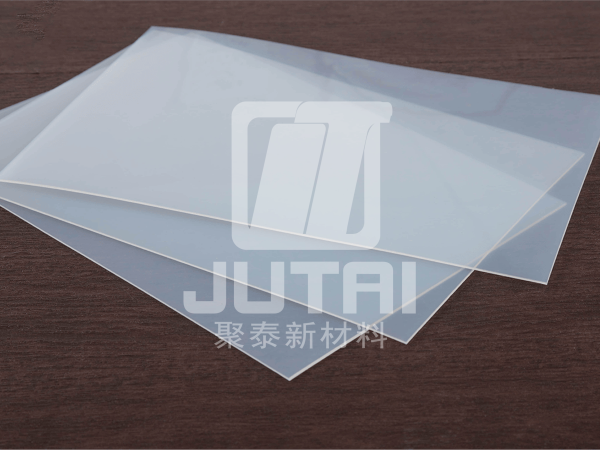
Engineers often confuse various fluoropolymer capabilities during the design phase. We must examine the structural differences between PFA and PTFE carefully. PTFE features microscopic porosity at a structural level. Sintering processes cause this inherent porous nature. Chemicals penetrate these tiny microscopic voids easily. This penetration traps harsh acids inside the polymer structure. Cross-contamination occurs when switching chemistries inside a PTFE-lined tank.
PFA eliminates this porosity problem entirely. Manufacturers utilize a melt-processing technique to create PFA. Melt processing generates a smooth, highly dense surface. This dense surface actively prevents chemical permeation. It creates an impenetrable barrier for aggressive fluids.
We must also compare PFA against FEP. FEP is another melt-processable fluoropolymer option. However, an ultra-pure PFA sheet maintains mechanical strength at much higher temperatures. PFA withstands continuous exposure up to 260°C. FEP typically limits out around 200°C. Exceeding FEP temperature limits causes severe dimensional warping. Warping compromises weld seams and joint integrity.
Specify PFA when applications involve highly penetrative acids. Hot HF and boiling Piranha solutions demand PFA. Choose PFA when complex thermoforming is necessary. It outperforms alternatives when systems demand ultra-low extractables in UPW applications. The right material choice prevents premature equipment failure.
| Performance Feature | PFA Sheet | PTFE Sheet | FEP Sheet |
|---|---|---|---|
| Manufacturing Process | Melt-processed | Sintered | Melt-processed |
| Surface Porosity | Virtually void-free | Micro-porous | Virtually void-free |
| Max Operating Temp | 260°C | 260°C | 200°C |
| Thermoformability | Excellent | Poor | Good |
| Permeation Resistance | Very High | Moderate | High |
Semiconductor fabs operate under strict parts-per-trillion tolerances. A single metallic ion can alter wafer electrical properties. Inferior polymer sheets pose severe risks to entire production lines. They leach calcium, iron, or trace organics directly into process streams. Copper and zinc impurities cause particularly devastating yield drops. You must eliminate these contamination sources aggressively.
High-purity resin baselines matter deeply in material selection. We must differentiate standard industrial PFA from high-purity grades. Manufacturers design high-purity PFA resins specifically for semiconductor usage. They formulate these resins to minimize terminal end groups. Unstable end groups react easily in harsh chemical environments. Stabilizing these groups significantly reduces chemical reactivity. It lowers metallic impurities drastically before extrusion even begins.
Look for verifiable extractable testing data. SEMI F57 guidelines dictate strict requirements for fab materials. You must align internal evaluations alongside these specific standards. SEMI F57 governs polymer materials used in ultrapure water networks. It also regulates liquid chemical distribution systems thoroughly. Reputable suppliers test their materials against these exact parameters. They provide detailed reports showing trace metal levels below ppt detection limits. Never assume industrial-grade plastics meet these stringent semiconductor requirements.
Semiconductor environments subject materials to extreme chemical abuse. We must detail expected performance against standard fab chemistries. Fluid handling systems face three primary aggressive media types:
Permeation resistance requires careful consideration during tank design. Surface chemical resistance is only the first defense layer. Sheet density matters equally for long-term survival. High density prevents dangerous chemical vapor permeation. Fluoride vapors penetrate porous materials over time. These vapors eventually attack underlying stainless steel structures. Dense PFA protects these structural substrates flawlessly inside lined tanks.
Acknowledge crucial longevity variables during your design phase. Sheet thickness directly determines the protective lifespan. Operating temperature affects overall material durability significantly. Chemical concentration also alters polymer endurance over time. Thicker linings provide longer service lives in heated acid applications. You must balance material thickness against desired heat transfer rates.
Raw material quality only solves half the contamination puzzle. Machinability requires precisely controlled thermal cycles. Technicians regularly thermoform and machine these plastic sheets. Thermoforming induces internal stress if handled poorly. Proper thermal management prevents these hidden stress fractures. It stops dimensional warping during complex fabrication steps. Heat annealing relieves machining stress effectively.
Welding presents unique challenges for custom equipment builds. Large wet benches demand meticulous hot-gas welding. Custom chemical tanks require identical seaming techniques. Weld structural integrity remains the weakest link in any system. Engineers must perfectly match the welding filler rod. The rod must align precisely to the ultra-pure sheet grade. Using a standard industrial weld rod contaminates the entire high-purity assembly. Welders must control gas temperatures tightly to prevent polymer degradation.
Surface scratching creates dangerous particle entrapment points. Transport demands extremely careful handling protocols. Cleanroom manufacturing for these parts is non-negotiable. Specialized protective packaging ensures pristine arrival at your facility. Workers must wear appropriate cleanroom gloves during unpacking. Using sharp metal tools near unprotected sheets causes irreversible damage. You must implement strict material handling procedures across your fabrication floor.
Specifying top-tier materials requires evaluating the actual supplier deeply. Qualified manufacturers provide full lot-to-lot traceability automatically. They link every finished sheet to specific high-purity resin batches. This traceability isolates potential contamination issues quickly. You can track exact production dates and resin lots upon request.
Verify the supplier's manufacturing environment rigorously. Extrusion must occur strictly inside ISO-certified cleanrooms. Packaging requires identical cleanroom standards to remain effective. This controlled environment prevents embedded airborne particulates. Standard industrial extrusion lines introduce dust into the hot polymer melt. Cleanroom extrusion eliminates this specific failure mode entirely.
Assess dimensional tolerances strictly before placing bulk orders. Suppliers must maintain rigid gauge control across massive sheets. Consistent thickness ensures highly accurate CNC machining. It guarantees uniform thermal transfer properties across heated tank bottoms. Poor thickness control causes uneven heating and potential hot spots. These hot spots accelerate chemical attack locally.
Request essential documentation next. Ask for physical material certificates immediately. Demand comprehensive extractable test reports detailing ion levels. Order sample plaques for internal fab qualification testing. You can review relevant technical specifications through a trusted semiconductor PFA sheet supplier portal. Testing physical samples validates vendor claims before you commit capital.
Specifying the right material is a rigorous risk-management exercise. Your main priority is balancing absolute chemical inertness and low-extractable purity. Every wetted surface represents a potential contamination vector. Protecting wafer yields requires vigilance at the component level.
Do not compromise on base resin grades. Never ignore strict manufacturing traceability protocols. Base all purchasing decisions on comprehensive extractable data reports. Demand strict SEMI F57 standard alignment from your vendors. Verify proven fabrication and welding compatibility before committing to a design.
Engage material specialists early in your engineering process. Review specific chemical and temperature environments together. Request detailed technical data sheets for thorough evaluation. Order material samples to conduct hands-on qualification testing. Proactive material selection guarantees stable operations and higher manufacturing yields.
A: Typically up to 260°C (500°F). Keep in mind mechanical load-bearing capacity decreases at these peak temperatures. You must account for reduced structural rigidity when designing heated chemical tanks or manifolds.
A: High-purity grades use specific resins featuring stabilized end-groups. Manufacturers extrude them in cleanrooms to prevent particulate contamination. Labs rigorously test them to ensure trace metals remain below ppt detection limits.
A: Due to its extreme non-stick properties and low surface energy, PFA cannot be conventionally glued. It must be mechanically fastened or hot-welded to compatible fluoropolymers. Alternatively, specialized chemical etching on one side allows it to accept specific industrial adhesives.
A: Thicknesses generally range from thin linings around 2mm to 3mm for tank wrapping. Suppliers also provide thick blocks up to 50mm or more. These thicker sheets are ideal for machining complex manifolds and heavy structural components.


