
Views: 0 Author: Site Editor Publish Time: 2026-10-20 Origin: Site


Engineering plastics often force a tough compromise between chemical resistance and load-bearing strength. Unfilled Polyphenylene Sulfide (PPS) delivers exceptional chemical defense and baseline thermal stability. However, it lacks the mechanical rigidity required for heavy structural applications under extreme heat. Designers frequently struggle to find materials resisting warp or failure during continuous high-temperature stress. Advanced polymers often break project budgets, leaving engineers searching for a highly capable middle ground. Extruding or pressing PPS combined with glass fiber reinforcement perfectly bridges this gap between standard plastics and ultra-expensive options.
This article explores exactly how adding glass fibers transforms the polymer matrix. We detail how a glass filled PPS sheet alters structural performance, thermal limits, and machining requirements. You will learn to confidently specify the correct material grade for your most demanding engineering environments.
To understand the mechanical multiplier effect, you must look at the polymer matrix level. Unfilled PPS features a semi-crystalline structure. It offers decent baseline strength. However, when you apply intense mechanical stress, the internal polymer chains begin to yield. Adding rigid glass fibers changes this dynamic completely.
When you apply load to a glass filled PPS sheet, the relatively soft polymer matrix transfers that stress directly to the high-strength glass fibers. This load-transfer mechanism effectively doubles both the tensile and flexural strength of the base material. The composite structure absorbs forces that would normally cause standard plastics to bend or break.
Creep resistance represents another massive structural upgrade. High temperatures typically cause polymer chains to slide past one another. Engineers call this phenomenon "creep." The integrated glass matrix physically blocks this chain movement. Components maintain their structural integrity under continuous mechanical stress in hot environments. This makes the material ideal for pressurized housings or load-bearing brackets.
We must transparently address the resulting trade-offs. The impact on brittleness is significant. While overall stiffness (flexural modulus) increases exponentially, the elongation at break decreases sharply. The material becomes noticeably less ductile. It will not bend before breaking. Therefore, you should actively avoid specifying this composite for high-impact zones, drop-prone components, or flexible snap-fit applications.
Structural Baseline Comparison Table
| Property | Unfilled PPS | 30-40% Glass-Filled PPS |
|---|---|---|
| Tensile Strength | ~ 70 - 85 MPa | ~ 130 - 190 MPa |
| Flexural Modulus | ~ 3.5 - 4.0 GPa | ~ 11.0 - 15.0 GPa |
| Elongation at Break | ~ 15 - 20% | ~ 1.5 - 2.5% |
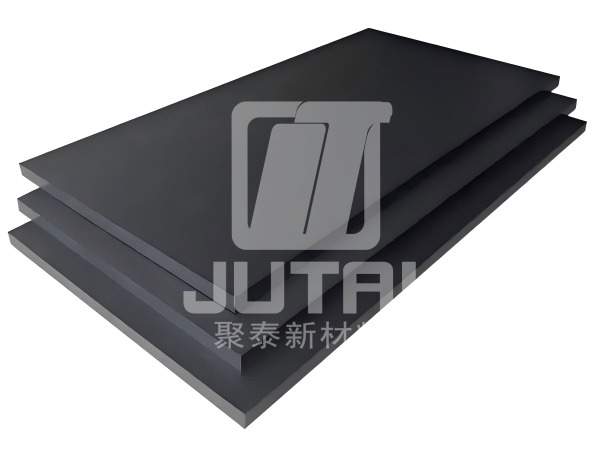
Heat resistance separates standard plastics from true engineering-grade materials. Unfilled PPS has a glass transition temperature (Tg) around 85°C. Above this point, it begins to lose mechanical stiffness rapidly. Glass fibers lock the polymer structure in place, bridging the soft zones within the crystalline matrix.
This locking mechanism raises the continuous use temperature dramatically. It pushes the Heat Deflection Temperature (HDT) from moderate levels to well over 260°C. You can deploy these components in environments nearing the polymer's actual melting point without suffering sudden structural collapse.
When discussing dimensional stability, we must evaluate isotropic versus anisotropic shrinkage. The Coefficient of Linear Thermal Expansion (CLTE) drops significantly when you add glass. However, the manufacturing process dictates fiber orientation.
During extrusion, glass fibers align longitudinally in the direction of the flow. This creates anisotropic properties. The sheet will expand slightly differently along the X, Y, and Z axes when heated. Compression molding distributes fibers more randomly, offering closer to isotropic (uniform) behavior. Designers must account for these directional variations during tight-tolerance part layout.
Moisture absorption plays a crucial role in overall stability. Many engineering plastics swell in humid environments, ruining tight tolerances. PPS inherently absorbs almost zero moisture. The addition of inorganic glass fibers maintains this excellent trait. Environmental humidity will never compromise your newly achieved dimensional stability.
Follow these specific steps to manage thermal expansion during your design phase:
Engineers consistently specify the PPS-GF40 sheet for their most critical structural components. Why is 40% the accepted industry standard? This specific ratio offers the absolute optimal balance between manufacturing melt-flow and ultimate final rigidity. Pushing the glass content higher makes the raw material too brittle to extrude cleanly. Dropping the glass content lower leaves mechanical performance gaps under heavy loads.
Target component profiles for this specific material grade rely on rigidity and chemical defense. Ideal use cases include:
Chemical compatibility retention remains a massive selling point. The addition of rigid glass fiber does not degrade the base polymer's renowned resistance to broad-spectrum chemicals. The PPS matrix fully encapsulates the microscopic glass strands. Acids, highly basic alkalis, and aggressive industrial solvents cannot attack the fibers easily. You retain the ultimate chemical shield while gaining heavy-duty structural muscle.
You cannot machine glass-reinforced composites using standard shop protocols. The tooling requirements change drastically. Glass fibers act like microscopic abrasives tearing against your cutting edges. Standard high-speed steel (HSS) tools will wear out almost immediately. You must utilize polycrystalline diamond (PCD) inserts or high-grade solid carbide tooling to survive the highly abrasive nature of these fibers.
Managing feeds, speeds, and coolant demands precision. You should maintain moderate feed rates. Plunging too slowly causes tool rubbing. Pushing feeds too fast generates intense localized friction. This heat build-up will cause surface micro-cracking and material smearing. We highly recommend utilizing a steady, high-volume flow of non-reactive coolant. It keeps the cutting zone cold and aggressively flushes away the abrasive glass dust before it can recut.
Surface finish expectations must align with reality. Even with perfect machining parameters, exposed glass fibers can result in a slightly textured micro-finish. It will not look as flawlessly smooth as a machined unfilled polymer. If your specific application requires high-purity, ultra-smooth sealing surfaces, you must plan for specific post-processing. Lapping, fine-grinding, or specialized polishing steps are often necessary to hit strict surface roughness (Ra) targets.
Best Practices and Common Mistakes in Fabrication:
Selecting the right composite grade dictates the success or failure of your project. You must weigh glass-filled PPS against both its unfilled counterpart and alternative advanced blends.
When comparing glass-filled versus unfilled PPS, the decision revolves around stress and impact. Choose glass-filled specifically for static, load-bearing applications requiring tight thermal tolerances. You need it when the part cannot bend. Conversely, choose the unfilled grade for applications requiring higher ductility, impact absorption, or significantly lower tool wear during mass production.
Evaluating glass-filled versus Carbon Fiber (CF) or PTFE blends introduces the concept of wear dynamics. Glass is highly abrasive. It acts like sandpaper against mating metal surfaces. Therefore, glass-filled sheets perform poorly in sliding friction environments. If your application requires dynamic wear resistance—such as bushings, bearings, or wear pads—you must pivot. Carbon fiber or PTFE-modified PPS actively lowers the friction coefficient and protects mating hardware.
Comparing glass-filled PPS against PEEK highlights the ultimate cost-to-performance ratio. PEEK is universally recognized as the top-tier structural polymer. However, glass-filled PPS offers roughly 80% of PEEK's structural and thermal performance. It achieves this impressive metric at a fraction of the raw material cost. This makes the glass-reinforced PPS an ideal value-engineering alternative for projects demanding high performance on a strict budget.
High-Performance Polymer Comparison Matrix
| Material Grade | Best Suited For | Primary Limitation | Relative Material Cost |
|---|---|---|---|
| Unfilled PPS | Chemical vessels, ductile components | Low structural strength at high heat | Low |
| PPS-GF40 | Static load-bearing, high-temp parts | Brittle, abrasive to mating parts | Medium |
| PPS CF/PTFE | Dynamic bearings, sliding wear pads | Lower tensile strength than glass | Medium-High |
| PEEK (Unfilled) | Extreme mechanical & thermal loads | Exceeds budget for many projects | Very High |
Successfully navigating high-temperature engineering challenges requires the right material foundation. Adding glass fiber to a base PPS matrix completely transforms its physical capabilities. It elevates a chemically resistant plastic into a highly rigid, thermally stable structural material. If your application demands unyielding load-bearing strength, strict dimensional control, and chemical resistance at temperatures exceeding 200°C, a glass-reinforced grade stands as the optimal engineering choice.
Actionable Next Steps:
A: No. The PPS polymer matrix fully encapsulates the microscopic glass fibers. This encapsulation ensures the material maintains nearly identical chemical resistance to the base resin. Acids, alkalis, and strong industrial solvents cannot easily penetrate the matrix to attack the internal glass structure.
A: It is highly discouraged. The exposed glass fibers are extremely rigid and abrasive. They will act like microscopic sandpaper, quickly wearing down mating metal surfaces. PPS modified with PTFE or carbon fiber is the correct choice for dynamic wear applications.
A: Extrusion naturally aligns the glass fibers longitudinally along the flow path. Designers must account for slight anisotropic behavior. You will see measurable differences in ultimate tensile strength and thermal expansion between the extrusion direction and the transverse direction during component layout.
A: Standard technical grades are generally not certified for food contact. However, specific manufacturer grades engineered with compliant binders and ultra-clean manufacturing processes can meet these strict requirements. You must always verify lot-specific FDA certifications with your supplier before procurement.


