
Views: 0 Author: Site Editor Publish Time: 2026-04-21 Origin: Site


In demanding industries, material choice is rarely a simple matter of cost or convenience. Engineers, buyers, and product designers need tubing materials that can hold their shape, resist aggressive environments, and continue performing over long service cycles without unexpected failure. This is where PEEK Tube becomes especially valuable. Known for its balance of thermal stability, chemical resistance, mechanical strength, and long-term durability,PEEK tube has become an increasingly trusted option in applications where standard plastics may deform, crack, swell, or wear too quickly. Understanding how this material behaves under real operating conditions is essential for selecting the right tubing solution and avoiding performance problems later in the process.
Tubing is often treated as a secondary component, but in reality it plays a critical role in system reliability. Whether it is carrying chemicals, protecting wires, guiding fluids, or supporting precision assemblies, a tube must withstand more than just internal flow. It may also face high temperatures, repeated bending, pressure fluctuations, abrasive contact, and exposure to cleaning agents or solvents.
When tubing fails, the consequences can range from production downtime to contamination, leakage, and costly repairs. That is why resistance and durability are not just technical specifications on a data sheet. They directly affect maintenance frequency, safety margins, and total life-cycle cost. A well-selected PEEK Tube helps reduce these risks because it performs consistently in environments that challenge many conventional polymers.
PEEK, short for polyether ether ketone, is a semi-crystalline engineering thermoplastic designed for advanced service conditions. Its molecular structure gives it a distinctive combination of stiffness, toughness, and stability. Unlike many general-purpose plastics, it is not easily weakened by heat or chemical attack, and it retains its mechanical integrity over time.
Several characteristics explain why PEEK Tube stands out:
The polymer structure of PEEK is highly stable, which supports excellent resistance to thermal breakdown and chemical degradation. This is one of the main reasons it is used in harsh process environments.
Its semi-crystalline nature contributes to dimensional stability, mechanical strength, and resistance to creep. That means the tube is less likely to lose shape under continuous stress.
Some materials are chemically resistant but mechanically weak. Others are strong but too heavy or vulnerable to corrosion. PEEK occupies an attractive middle ground, offering a more balanced profile for precision applications.
Because of this combination, PEEK tube is not simply a substitute for metal or fluoropolymer tubing. In many cases, it is selected because it solves a specific performance problem more effectively.
One of the most recognized advantages of PEEK Tube is its ability to operate in high-temperature environments. It can maintain structural stability and useful mechanical properties at temperatures that exceed the limits of many standard plastics. This makes it suitable for systems exposed to continuous heat, thermal cycling, or periodic sterilization.
In practical terms, high temperature resistance matters in several ways. First, the tube must not soften excessively under operating heat. Second, it must resist cracking or embrittlement after repeated heating and cooling. Third, it should keep tight dimensional tolerances if it is part of a precision assembly or fluid-handling system.
This is particularly important in:
· under-hood automotive systems
· aerospace interior and functional components
· medical devices requiring repeated sterilization
· semiconductor and analytical equipment
· industrial systems with hot fluids or heated housings
Compared with many commodity plastics, PEEK offers far better thermal endurance. Compared with some metals, it provides weight reduction and corrosion resistance while still handling demanding temperatures.
Chemical exposure is one of the fastest ways to shorten tubing life. Some polymers absorb solvents, some swell in contact with oils, and others become brittle after prolonged exposure to aggressive media. PEEK Tube is valued because it resists a wide range of chemicals and retains performance in challenging environments.
Its resistance is especially relevant when tubing comes into contact with:
· organic solvents
· fuels and oils
· cleaning agents
· acids and bases under controlled conditions
· laboratory reagents
· process chemicals
Of course, chemical compatibility is never a one-size-fits-all issue. Concentration, temperature, pressure, and exposure time all influence performance. Still, PEEK is widely recognized as a reliable option when the application requires more than ordinary plastic tubing can offer.
For manufacturers and end users, this chemical stability provides practical benefits. It helps reduce contamination risk, supports longer maintenance intervals, and improves confidence in fluid-handling systems where material breakdown is unacceptable.
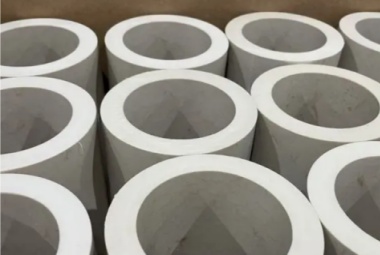
Durability is not only about surviving heat and chemicals. It is also about how a tube performs under physical stress. In many applications, tubing must tolerate pressure, installation force, clamping, vibration, and repeated handling. A weak material may deform, flatten, or crack over time. A high-quality PEEK Tube is chosen partly because it combines low weight with impressive mechanical strength.
This matters in assemblies where dimensional accuracy is essential. If tubing changes shape under load, it may affect sealing, alignment, or flow consistency. PEEK helps minimize that risk thanks to its stiffness and resistance to creep. In many systems, that translates into more stable performance over long production cycles.
Another benefit is fatigue resistance. Where tubing experiences repeated movement or cyclic stress, long-term durability becomes more important than initial strength alone. A material that looks acceptable at installation may deteriorate quickly in use. PEEK tube is often selected because it performs well not only on day one, but throughout extended service life.
In dynamic systems, abrasion and surface wear can be just as important as tensile strength. Tubes may rub against surrounding parts, guide moving components, or handle media that contains particles. In these situations, surface damage accumulates gradually and can eventually lead to failure.
PEEK Tube offers strong wear resistance compared with many other engineering plastics. This contributes to longer service intervals and more predictable performance. In systems where friction cannot be completely avoided, that advantage becomes highly practical.
The long-term service life of PEEK tubing is usually the result of combined strengths rather than one single property. It resists:
· thermal aging
· mechanical fatigue
· surface wear
· chemical attack
· dimensional drift
That combination is what makes PEEK suitable for high-value applications. Instead of solving only one problem, it supports a broader durability strategy for the entire assembly.
A direct comparison can help clarify where PEEK Tube fits in the material landscape.
Property | PEEK Tube | PTFE Tube | Nylon Tube | Stainless Steel Tube |
Heat resistance | Very high | High | Moderate | Very high |
Chemical resistance | Excellent | Excellent | Moderate | Good to excellent |
Mechanical strength | High | Low to moderate | Moderate | Very high |
Dimensional stability | High | Moderate | Moderate | Very high |
Weight | Low | Low | Low | High |
Wear resistance | High | Moderate | Moderate | High |
Process flexibility | High | High | High | Lower in complex lightweight systems |
This table does not mean one material is always better than another. PTFE may be preferred for certain chemical environments, and stainless steel remains valuable where extreme structural strength is required. However, PEEK Tube is often chosen when the application needs a more complete balance of heat resistance, chemical stability, strength, and low weight.
From our perspective at Suzhou Jutai HPM Co., Ltd., the value of PEEK Tube is not limited to one standout feature. What makes it genuinely useful is the way thermal resistance, chemical stability, wear performance, and mechanical strength work together in real applications. Over time, we have seen that customers usually benefit most when they evaluate PEEK not as a premium material for its own sake, but as a practical solution to reliability problems that standard tubing cannot consistently address. If you are comparing materials for a demanding project and want a clearer view of whether PEEK tube is the right fit, it is worth taking the time to review the operating conditions in detail. And if a more application-based discussion would be helpful, you are welcome to learn more from Suzhou Jutai HPM Co., Ltd. or contact our team for further technical information.
Yes, PEEK Tube is widely used in applications that involve elevated temperatures because it maintains strong mechanical and dimensional stability compared with many standard plastics. Actual performance depends on the full operating conditions.
It is often preferred because it offers a stronger balance of heat resistance, chemical resistance, mechanical strength, and durability. This makes it more reliable in demanding technical environments.
In many cases, yes. Because PEEK resists wear, chemical degradation, and deformation, it can support longer service intervals and reduce the risk of early tubing failure.
You should review media compatibility, temperature range, pressure, tube dimensions, installation conditions, and any cleanliness or compliance requirements. These factors determine whether a specific PEEK tube design is appropriate.


