
Views: 0 Author: Site Editor Publish Time: 2026-04-17 Origin: Site


PEEK (Polyetheretherketone) is a high-performance thermoplastic polymer that stands out for its impressive mechanical properties. It is widely used in various industries, from aerospace to medical and chemical processing, where durability, strength, and high-temperature resistance are critical. PEEK tubes, which are a crucial form of this material, are particularly valued for their ability to endure the harshest environments while maintaining high performance.
In this article, we will explore the advanced technology behind PEEK tubes and examine their performance advantages. By the end, you will understand why PEEK tubes are revolutionizing industries and how they can provide a reliable solution for your applications.
PEEK is a semi-crystalline thermoplastic polymer renowned for its exceptional mechanical strength, high chemical resistance, and thermal stability. These properties make it an ideal choice for creating durable and long-lasting tubes used in critical applications. Whether you’re looking to enhance the performance of industrial systems or improve the reliability of medical devices, PEEK tubes are a trusted solution.
Due to its high melting point and excellent resistance to chemicals, PEEK can withstand extreme conditions that other materials cannot handle. The material’s strength-to-weight ratio is another reason why it is often chosen over metals and other plastics in demanding applications.
The manufacturing process of PEEK tubes begins with extrusion, a technique where PEEK resin is heated to its melting point and forced through a die to create tubes of various diameters and lengths. This process is highly versatile, allowing manufacturers to produce tubes in a range of sizes tailored to specific applications. The extrusion method ensures a continuous flow of PEEK material, which is cooled and solidified to form the final product.
During extrusion, the PEEK resin undergoes a precise temperature control process to ensure that the material retains its inherent properties. The die is shaped to create tubes with consistent wall thickness, which is essential for maintaining the structural integrity and performance of the tubes. This process is particularly effective for producing long lengths of PEEK tubes, making it suitable for bulk production in industries like automotive, aerospace, and chemical processing.
For applications that require more intricate or complex shapes, injection molding and CNC machining are employed. While extrusion is ideal for producing basic tube shapes, injection molding offers the ability to form detailed and precise components. During the injection molding process, PEEK material is heated to a molten state and injected into a mold that shapes the material into the desired form. This method is particularly useful for applications requiring sharp bends, unique geometries, or additional structural features like flanges or connectors.
CNC (Computer Numerical Control) machining, on the other hand, is used to refine the dimensions of PEEK tubes with high accuracy. Using CNC machines, PEEK tubes can be cut, drilled, or milled to very tight tolerances, ensuring that the tubes meet the precise specifications required for highly demanding applications. CNC machining also allows for modifications to tube length, diameter, and wall thickness, making it suitable for custom orders and specialized applications.
PEEK tubes are widely recognized for their exceptional performance in challenging environments. Their unique properties make them an ideal material for a wide range of applications. Below are some of the key performance advantages of PEEK tubes.
One of the standout features of PEEK tubes is their durability. PEEK is an incredibly strong material with high tensile strength and flexural strength. This means that PEEK tubes can withstand significant mechanical stress without cracking or deforming, even when subjected to continuous or extreme pressure. The material's ability to resist impact and wear makes it suitable for demanding environments where other materials might fail.
PEEK is one of the few polymers that can maintain its strength and integrity at high temperatures. With a glass transition temperature of around 143°C (289°F) and a maximum continuous service temperature of 250°C (482°F), PEEK tubes can function reliably in high-temperature environments without undergoing significant degradation.
This high-temperature resistance makes PEEK tubes ideal for applications in industries where temperature extremes are common. For instance, in aerospace, PEEK tubes are used in fuel lines, hydraulic systems, and exhaust systems, where temperatures can fluctuate dramatically. In the automotive sector, PEEK tubes are employed in engine components, brake systems, and exhaust systems, all of which require materials capable of withstanding high temperatures for extended periods.
Another key advantage of PEEK tubes is their resistance to a wide range of chemicals. PEEK exhibits excellent resistance to acids, bases, solvents, oils, and hydrocarbons, making it suitable for applications in chemical processing, pharmaceuticals, and food processing.
PEEK tubes also offer a low friction coefficient, which is particularly advantageous in fluid transport systems. The smooth inner surface of PEEK tubes reduces friction as fluids or gases pass through, which leads to increased efficiency and reduced wear on the system. This feature is critical in applications where high-precision flow control is necessary, such as in hydraulic and pneumatic systems, as well as in medical devices like catheters.
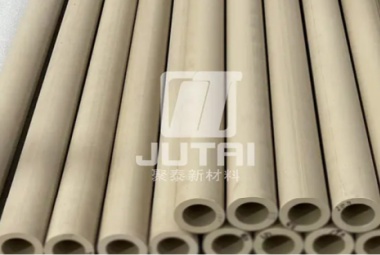
PEEK tubes are utilized in a variety of industries, thanks to their performance in extreme conditions. Here are some of the key sectors where PEEK tubes are widely used:
In the aerospace industry, PEEK tubes are used for fuel lines, hydraulic systems, and electrical insulation. Their ability to withstand extreme temperatures and pressures makes them ideal for high-performance aerospace applications.
PEEK tubes are increasingly being used in medical devices, including catheters, prosthetics, and surgical instruments. PEEK’s biocompatibility and resistance to sterilization processes make it a preferred material for implantable medical devices.
PEEK tubes are commonly used in the automotive industry for fluid transport systems, such as fuel lines and brake lines. Their resistance to high temperatures and chemicals ensures that they can operate effectively in demanding automotive environments.
In chemical processing, PEEK tubes are used in applications like reactors, pumps, and valves, where they are exposed to aggressive chemicals. The material's excellent chemical resistance ensures long service life and reliable performance in these harsh environments.
PEEK tubes outperform many other materials in key areas such as temperature resistance, chemical stability, and mechanical strength. Below is a comparison of PEEK with other common materials:
Property | PEEK Tubes | Metal Tubes | Ceramic Tubes | Standard Plastics |
Temperature Resistance | Up to 250°C | Up to 200°C | Up to 2000°C | Up to 150°C |
Chemical Resistance | Excellent | Moderate | High | Low |
Mechanical Strength | High | Very High | Moderate | Low to Moderate |
Weight | Lightweight | Heavy | Lightweight | Lightweight |
Cost | Moderate | High | High | Low |
As the table indicates, PEEK tubes offer superior temperature and chemical resistance compared to metals and other materials, while maintaining a lighter weight.
The manufacturing processes used to create PEEK tubes are engineered to provide exceptional precision, ensuring that each tube meets the stringent requirements of a wide range of applications. One of the most critical aspects of PEEK tube production is the use of CNC (Computer Numerical Control) machining, which enables manufacturers to achieve high accuracy and tight tolerances. This level of precision is essential for industries such as aerospace, where even the smallest deviation in dimensions can lead to performance issues. Additionally, laser cutting is often employed to further refine PEEK tubes, providing clean, sharp edges and precise lengths.
For industries like medical device manufacturing, where reliability and exact specifications are paramount, these advanced manufacturing techniques ensure that PEEK tubes maintain their integrity and performance throughout their lifecycle. By using CNC machining and laser cutting, manufacturers can produce PEEK tubes with customized diameters, wall thicknesses, and lengths, tailoring them to meet the specific needs of each client.
As industries continue to demand higher performance materials, PEEK tubes are positioned to play an increasingly important role. Their durability, high-temperature resistance, chemical stability, and versatility make them a reliable solution for a wide range of applications.
At Suzhou Jutai HPM Co., Ltd., we specialize in providing high-quality PEEK tubes tailored to your specific needs. With our commitment to excellence and extensive expertise in the field, we can help you find the best PEEK tube solutions for your applications. Our team is here to provide the support you need to make informed decisions and ensure the success of your projects.
1. What are the main advantages of PEEK tubes?
PEEK tubes offer exceptional temperature resistance, chemical stability, and mechanical strength, making them ideal for high-performance applications.
2. Can PEEK tubes be used in medical applications?
Yes, PEEK tubes are commonly used in medical devices due to their biocompatibility and resistance to sterilization methods.
3. How does PEEK compare to other materials like metals or ceramics?
PEEK outperforms many materials in terms of chemical resistance and temperature tolerance, offering a lighter, more cost-effective option than metals and ceramics.
4. What industries benefit most from PEEK tubes?
Industries such as aerospace, medical, automotive, and chemical processing all benefit from the use of PEEK tubes in their systems and equipment.


